How to Keep GCLID and FBCLID Click IDs Alive Across a 90-Day Sales Cycle

Click ID Persistence: How to Keep GCLID and FBCLID Alive Across Long Sales Cycles
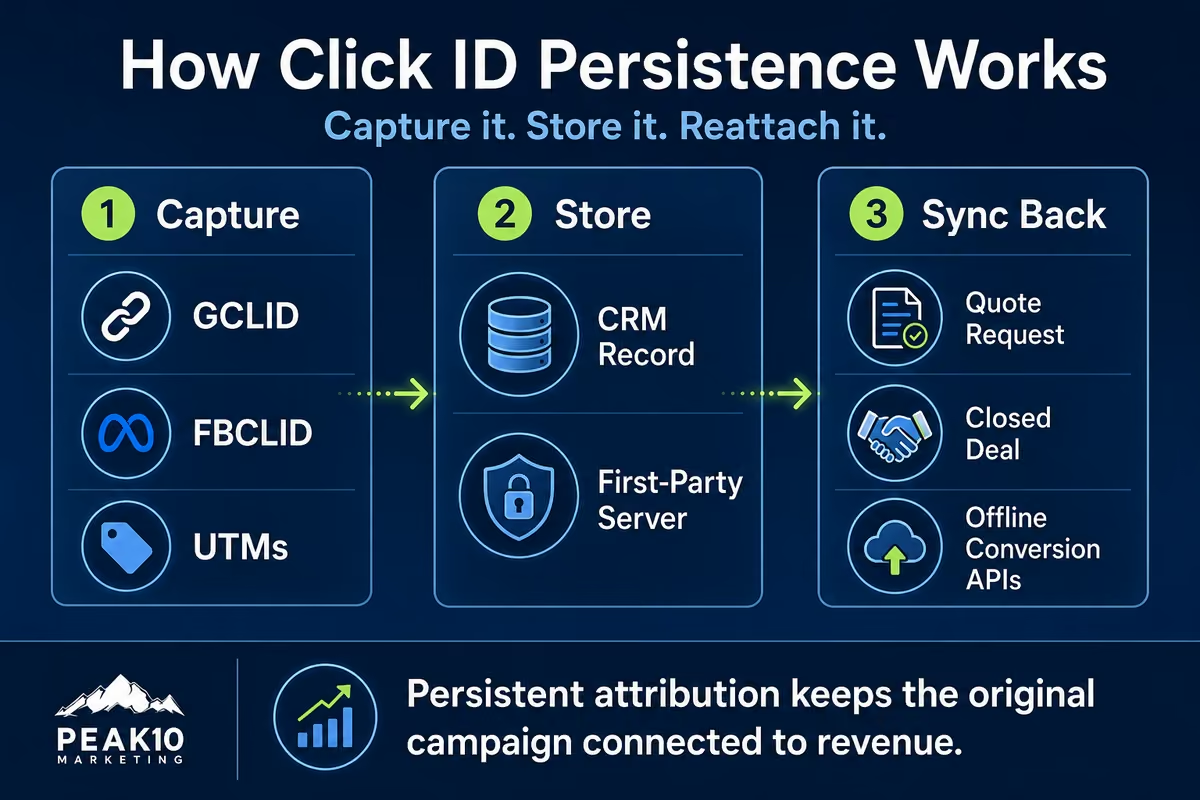
Click ID persistence for manufacturers is the unglamorous trick that saves the sale: capture the GCLID and FBCLID at form fill, store them in the CRM, and reattach them at key marketing milestones and when the deal closes months later. Skip it, and the ad that actually started the deal gets zero credit while your best campaign looks like a loser.
How the save actually works:
- GCLID and FBCLID: the fingerprint of the click that paid off
- Caught at form fill, parked in the CRM
- Reattached at call, quote, demo, close, and other key sales/marketing eventws so the right ad gets the credit
This post is the technical playbook for click ID persistence. For the broader closed-loop attribution method this fits into, see the M2CO Attribution hub.
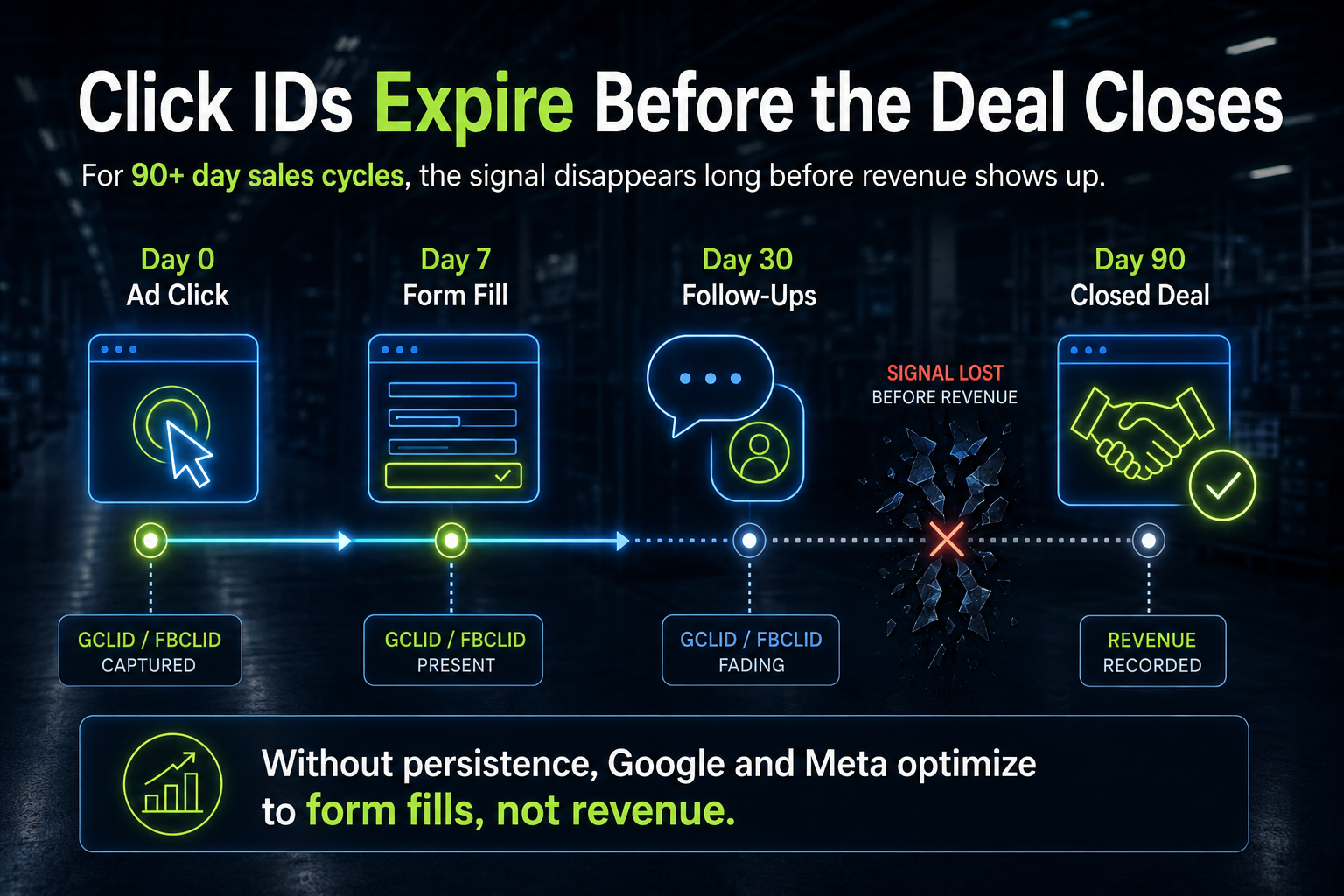
The Problem: Tracking Data Vanishes After One Click
And if you don't have advanced tracking frameworks using GTM and your own first party server, when that same buyer returns, even from the same browser, the connection to your original campaign is gone.
For manufacturers with +90-day sales cycles, this isn't an analytics inconvenience. It's millions in invisible attribution.
Why This Matters More Than You Think
High ticket buyers don't impulse-purchase $10,000 to $100,000 machines. They research across multiple devices. Compare specs.
Read case studies. Consult with colleagues. They return to your site many times before they ever talk to sales.
When you can't capture critical customer marketing on the first visit to your site, your ad platform reporting is never going to show you the true picture of your advertising ROI.
Bad data doesn't just hide wins, it actively destroys profitability by teaching algorithms to optimize toward the wrong signals.
You can't optimize what you can't see. Your competitors who solve this first will outspend you profitably while you wonder why your traffic isn’t being categorized correctly. .
How Data Persistence Actually Works
With the right configuration, M2CO can capture UTM parameters and click IDs the instant someone lands on your site. That data gets stored in first-party servers where it survives across sessions, browser tabs, return visits.
When they convert, hidden form fields auto-populate with the original attribution data. Everything syncs to your CRM. Your sales team sees the full journey.
Your ad platforms get credit for closed deals.
Even when buyers return directly or click through from an email, they stay attributed to the campaign that started the relationship. This persistent data becomes the foundation of your first-party data advantage.
Privacy-Safe, Future-Proof Architecture
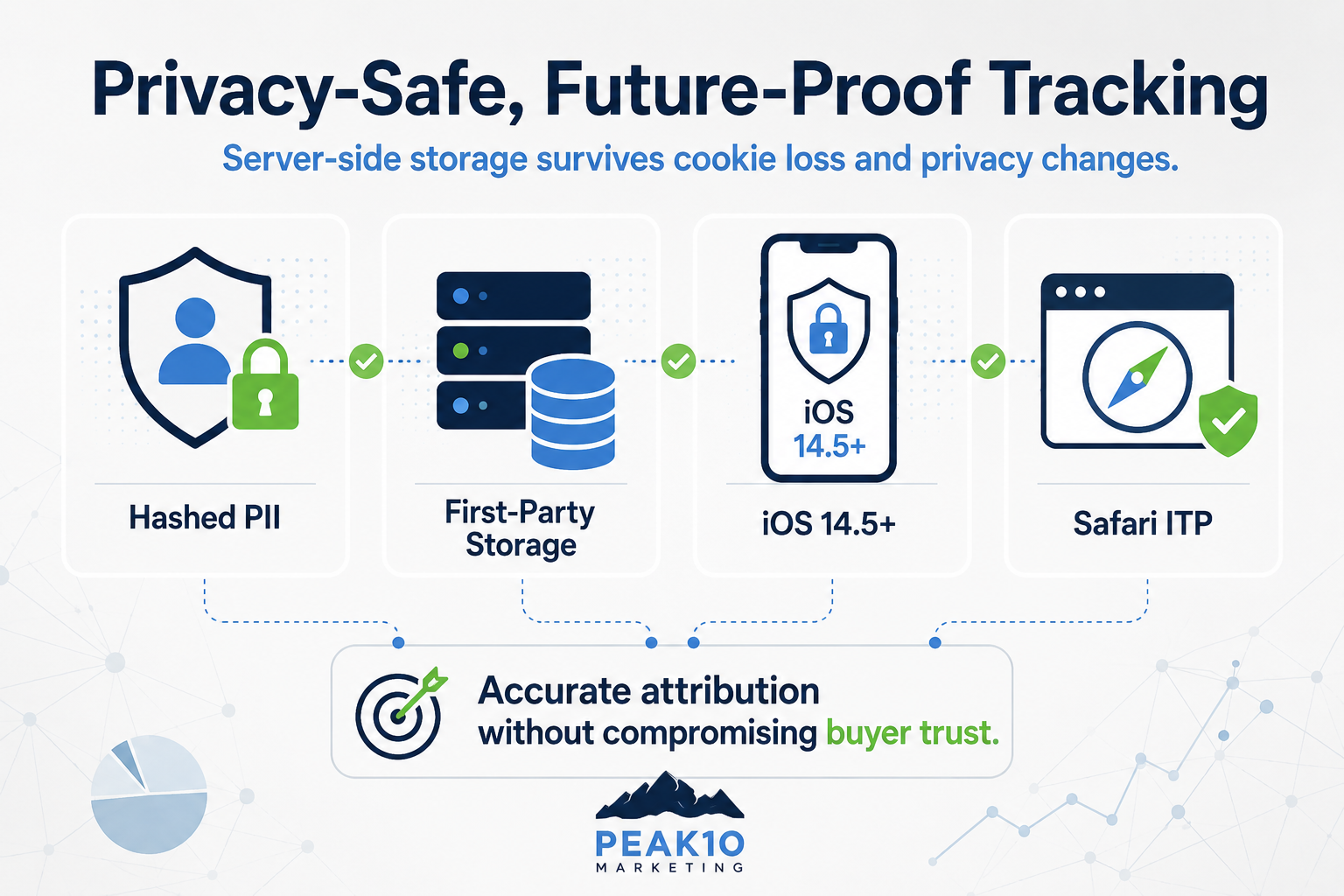
We use hashed PII for privacy compliance. Server-side first-party storage that survives cookie restrictions. The whole system is built to work with iOS 14.5+ and Safari ITP.
Accurate attribution without compromising buyer trust or breaking regulations.
What 44% More Visibility Looks Like
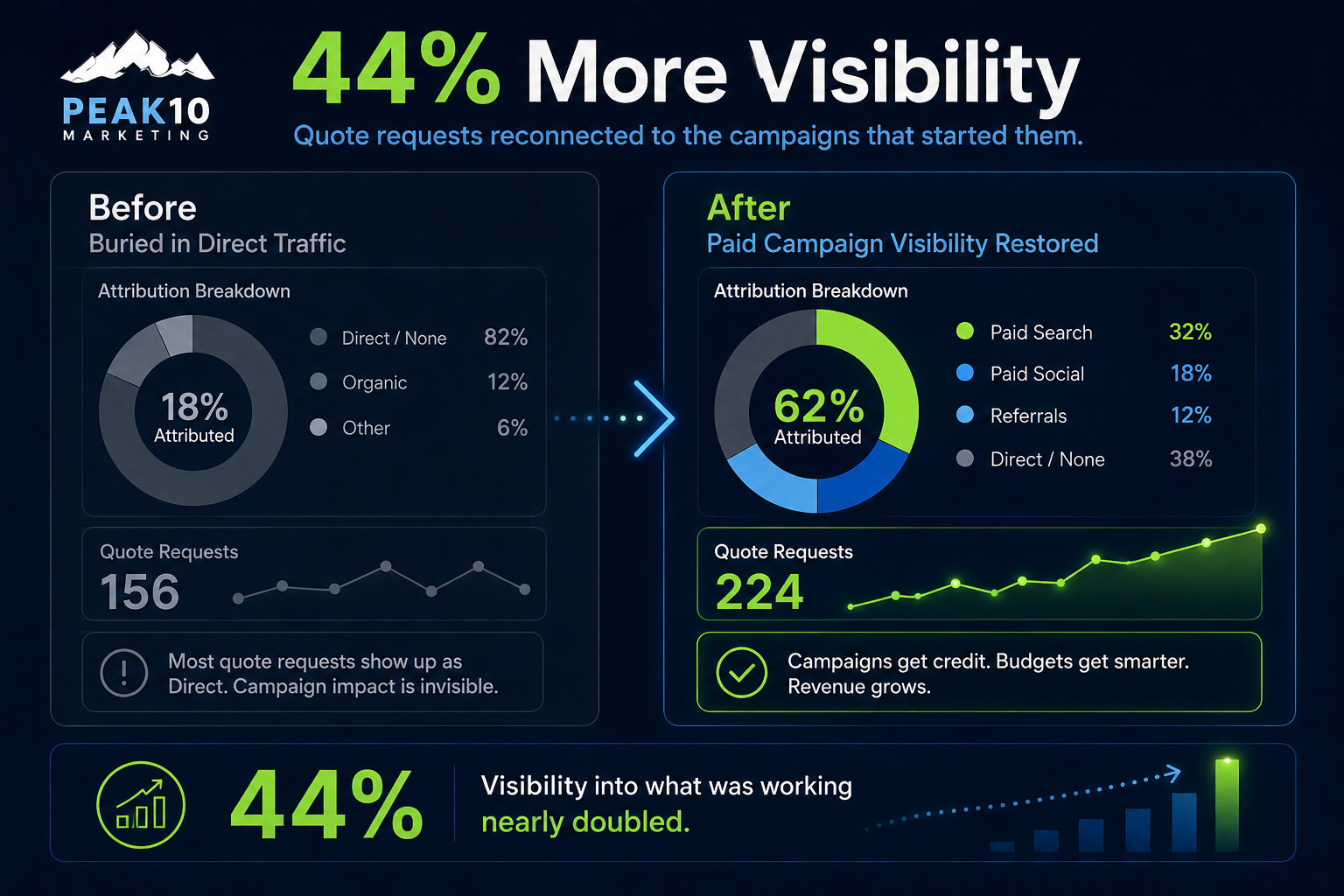
After implementing persistent tracking for one manufacturer, we were able to connect 44% of their quote requests back to the paid campaigns that originally drove them.
Before, those sales were buried under "direct traffic", invisible to both their CRM and ad platforms. Once the data path was restored, that same activity became measurable and optimizable.
Their cost per acquisition didn't change, but their visibility into what was actually working nearly doubled, revealing which ads, keywords, and audiences were truly driving revenue.
Learn how M2CO keeps tracking data alive and connected to real revenue.

Related Resources
Learn More About the Future of Digital Marketing
The future belongs to those who build it. Discover how to engineer marketing systems that perform as precisely as your production line.