2.5 Million People Reached on a $16K Budget: A Community-Marketing Playbook

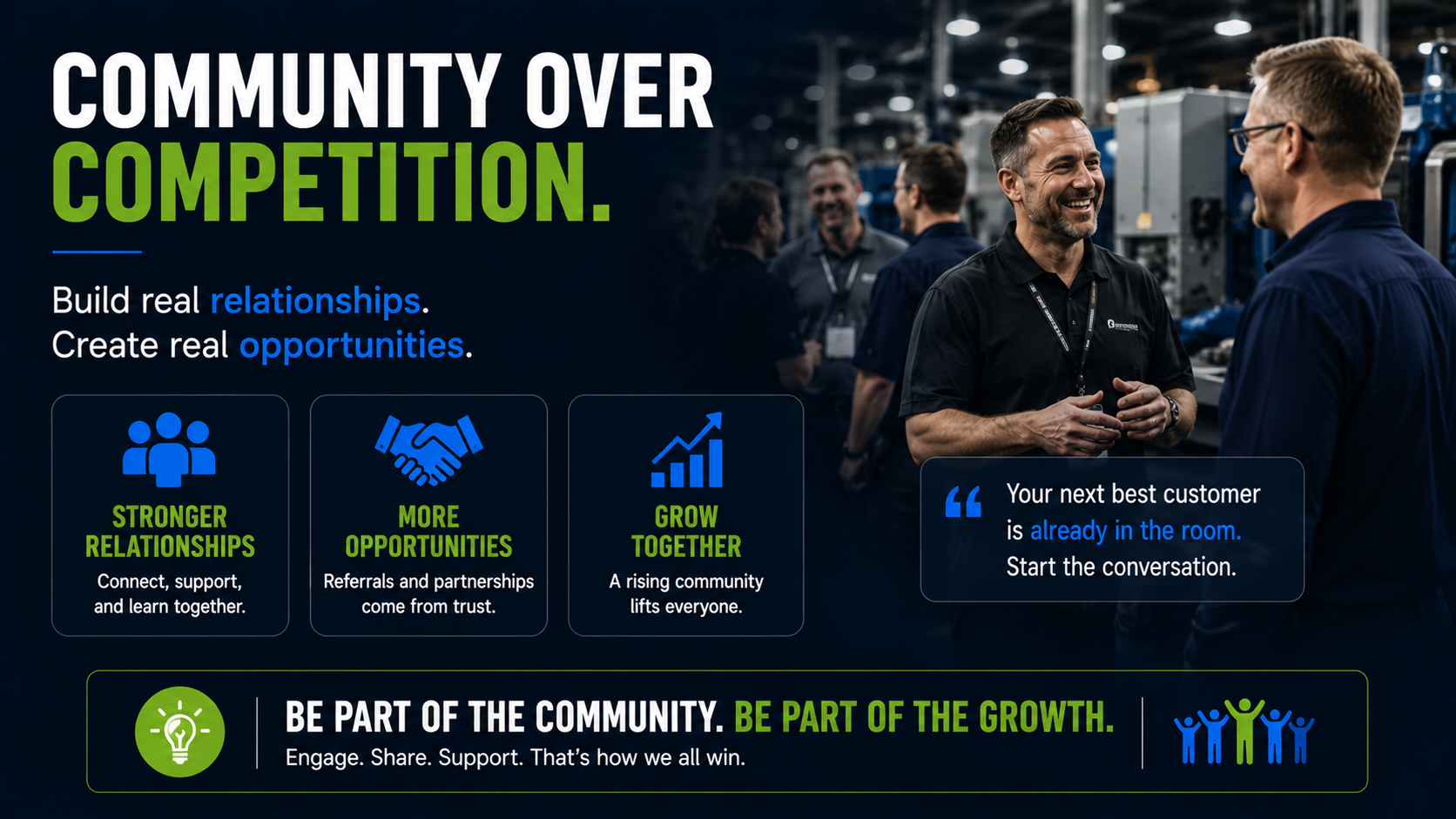
Community-based marketing for manufacturers treats your niche as a living community of your ideal clients who talk to each other, not a cold list you blast. Make that shift and the economics move with it: acquisition costs drop, referrals climb, and customers stay far longer. People buy from rooms they feel they belong to.
Why the shift pays off:
- The reframe: a community of ideal clients, not a contact list
- The payoff: lower CAC, more referrals, longer customer lifetime value
- The engine: peers bringing in peers
Here's what happened when we treated a community cause like a manufacturing sales pipeline.
Since this case study first published, the campaign has kept compounding. It has now reached 2.5 million people and 7.5 million views on a $16,000 budget across paid social and PR. The milestones below show how a system built for manufacturers produced that scale.
We Engineered the Buyer Journey Like a Production Line
At Peak 10, we built the M2CO Method (Marketing Milestone Conversion Optimization) to solve attribution problems for manufacturers with complex sales cycles. A manufacturer might generate a quote request from a Google ad, but if the sale happens three months later over the phone, the platform never sees that conversion.
The answer? Break the buyer journey into measurable milestones: ad click → lead → call → quote → close. Track every stage.
Feed verified conversion signals back to the ad platforms so they learn what actually works.
Save Cedar Creek LLC required the same approach.
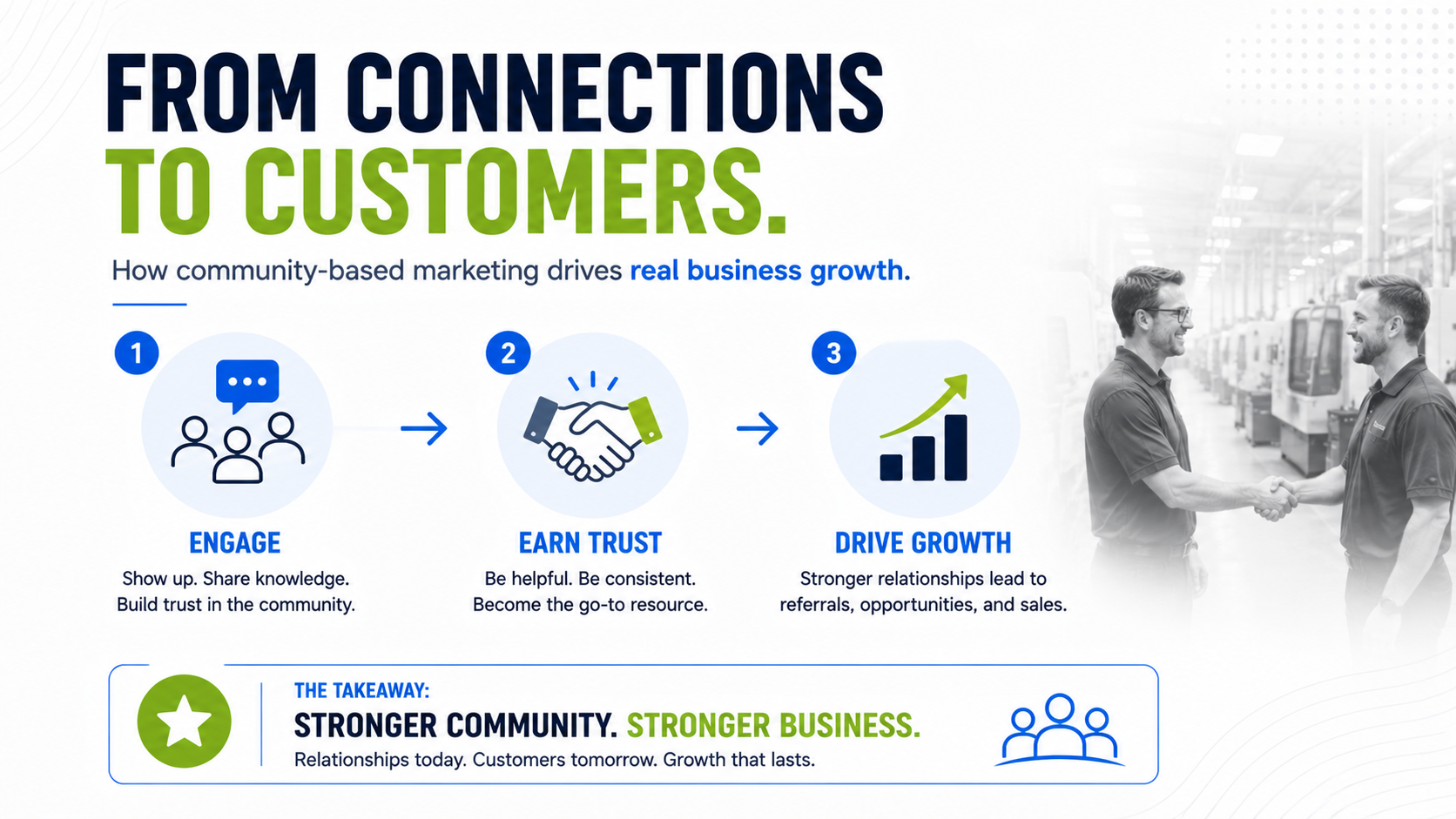
We mapped the community engagement journey like a production line:
Awareness → Interest → Action → Advocacy
- Awareness: Someone sees a post, article, or yard sign about the threat to Cedar Creek
- Interest: They click through to learn more, read details, watch the video (966,400 three-second views, 21,100 one-minute views)
- Action: They sign the petition, attend a meeting, contact officials
- Advocacy: They share with neighbors, put up yard signs, bring others into the campaign
Just like manufacturing sales, we needed to track conversions at every milestone, not just at the end. Every signature, every share, every meeting attendance fed back into the system to optimize what came next.
The Facebook data proved the system worked: 200 days and 10 hours of total watch time. In six weeks.
That's engagement depth you can't fake and can't buy with impressions alone.
We Used First-Party Data to Drive Real-Time Decisions
Manufacturers close sales through phone calls, quotes, and purchase orders, not pixels. Traditional tracking misses most of what matters. That's why we developed M2CO to reconnect offline sales milestones to digital platforms using first-party data.
Save Cedar Creek operated the same way. Real community action happened offline: yard signs, public meetings, neighborhood conversations, face-to-face organizing. Digital channels amplified those moments, but the conversions that mattered weren't clicks or impressions.
We tracked:
- Petition signatures by day, source, and geography
- Meeting attendance and repeat participation
- Yard sign distribution
- Facebook engagement depth (3-second views vs. 1-minute views vs. interactions)
- Organic vs. paid performance by content type
- Media mentions and reach
This first-party data told us what was working in real time, just like CRM milestone tracking tells manufacturers which campaigns produce quotes and which ones waste budget.
When we saw certain content driving 105,000 views organically, we knew the message resonated. When paid amplification drove equal reach, we knew advocacy was multiplying our investment.
We Applied the Modular Marketing System for Speed and Scale
Our Modular Marketing System was built to address the biggest frustration manufacturers face: managing multiple vendors while trying to track results across complex sales cycles.
Strategy firms, creative teams, and media buyers rarely communicate effectively. This creates attribution gaps that obscure ROI. We built an integrated system where everything works together: strategy, creative, media buying, analytics, and offline sales integration.
Save Cedar Creek needed the same integration on a compressed timeline.
We launched a full system in days:
- Strategy: Define the threat with precision, map decision timelines, identify key stakeholders
- Creative: Messaging that matched urgency and local stakes, visuals that worked across all channels
- Media buying: Targeted PR distribution, paid social amplification, earned media outreach
- Analytics: Real-time tracking of every milestone, velocity metrics, attribution by channel
- Offline integration: Public meetings, yard signs, neighborhood organizing, volunteer coordination
No handoffs. No coordination gaps. One integrated system moving fast.
The results show what integrated systems deliver: 7.5 million total views, with organic community sharing and paid amplification running nearly neck and neck. Strategic paid dollars generated roughly equal organic reach as the community shared, commented, and spread the message themselves.
This is how we help manufacturers double revenue in 12 months. It's also how we mobilized 3,000 people in six weeks.
We Optimized for Conversion Velocity, Not Vanity Metrics
Manufacturers don't care about impressions and clicks. They care about quote requests and revenue per campaign.
That's why M2CO shifts focus to quoting velocity. How quickly are leads converting to quotes? How many quotes are turning into closed deals?
What's the actual ROI by campaign, not just by click?
For Save Cedar Creek, vanity metrics meant nothing. We tracked:
Velocity metrics:
- Week-over-week growth in views and engagement
- Acceleration of meeting attendance
- Repeat participation rates
- Speed of social sharing and comment volume
- Earned media pickup rate
Conversion metrics:
- 966,400 three-second views → 21,100 one-minute views (2.18% conversion to deep engagement)
- 200,000+ content interactions from over a million viewers (about a 20% interaction rate)
- 1,266 petition signatures from a single town
- Political meetings secured, legislation introduced, legal challenges funded
When velocity increased, we doubled down. When it stalled, we adjusted immediately.
This is the same discipline we apply to manufacturing campaigns where every dollar needs to produce measurable pipeline growth.
We Organized the Community Like a CRM Pipeline
In manufacturing marketing, your CRM tracks what matters: when leads become sales calls, when quotes get issued, when deals close. Those signals represent actual buying intent.
For Save Cedar Creek LLC, the community was the CRM.
We segmented by engagement level:
- Tier 1: Core volunteers and organizers (high-value repeat participants)
- Tier 2: Active supporters (petition signers, meeting attendees, yard sign hosts)
- Tier 3: Engaged audience (3-second to 1-minute view converters, commenters, sharers)
- Tier 4: Aware but inactive (reached but not yet converted)
We tailored communication and asks to each tier, just like manufacturers tailor outreach based on where prospects sit in the sales pipeline.
High-value participants got direct coordination and leadership asks. Active supporters got clear next actions and social proof. Engaged audience got education and conversion opportunities.
Aware but inactive got awareness-building content.
The Facebook data showed this segmentation working: 966,400 people gave us at least 3 seconds, 21,100 gave us at least a minute, and 61,200 interacted directly. That's a classic engagement funnel, and we treated it like one.
Small Wins Compounded Into Transformational Results
Our Target Market Approach for manufacturers is built on one principle: stack small, measurable wins that compound into systematic growth.
Large, one-shot campaigns drain budget because they assume instead of measure. Without data feedback, they can't adapt. Breaking growth into smaller, measurable increments delivers faster, steadier ROI.
Every week we looked at:
- Targeting: Were we reaching the right people in the right geographies?
- Creative: Which posts drove 100,000+ views vs. which fell flat?
- Lead Capture: Was it easy to sign, attend, or share?
- Follow-Up: Were we converting interest into action?
- Data Feedback: What was working? What wasn't?
Each lever alone added 5-10% improvement. Together, they multiplied.
Better targeting produced higher-quality participants. Higher-quality participants took action more often. More actions created visible momentum.
Visible momentum attracted media attention. Media attention brought new participants and political pressure. Political pressure reinforced the campaign's credibility.
That's the multiplier effect. That's how small wins turn into transformational outcomes.
One post reached 105,300 views because the message was specific, the threat was clear, and the call to action was simple. Another reached 75,800 views because it showed the exact location and visual proof.
We didn't guess what would work. We measured, optimized, and scaled what performed.
Acquisition Cost: Under $4.25 Per Petition Signer, $0.0064 Per Person Reached
From a pure CAC perspective, the numbers tell the story manufacturers want to hear.
We spent roughly $16,000 total on ads and PR, which included:
- Paid social amplification (Facebook and Instagram)
- PR distribution
- Event costs
- Yard signs and materials
For 2.5 million people reached, that's about $0.0064 per person.
For 7.5 million total views, that's about $0.0021 per view.
For 3,000+ direct participants, that's under $4.25 per acquired petition signature.
But here's what matters most: we reached 2.5 million people, the kind of market penetration most brands spend millions trying to achieve.
That's not just campaign performance. That's the community becoming the distribution channel.
The platform performance showed smart budget allocation: 7.5 million total views, with organic community sharing and paid amplification running nearly neck and neck. Strategic paid dollars generated roughly equal organic reach as the community shared, commented, and spread the message themselves.
Most manufacturers would be thrilled with those numbers in a paid campaign. We achieved them because advocacy replaced paid reach. The community became the acquisition channel.
This happens when people have real ownership over an outcome that matters to them, just like customers who need the right equipment for critical operations become advocates when you solve their problem correctly.
What This Proves About Our Manufacturing Systems
Save Cedar Creek wasn't a marketing experiment. It was a real-world validation of the systems we've been refining for 15 years.
The Modular Marketing System works because it treats marketing like a factory: measurable inputs, repeatable processes, predictable outputs. We reached 2.5 million people because every component worked together without coordination gaps.
M2CO works because it reconnects offline conversions to digital platforms using first-party data, closing the attribution loop that leaves most manufacturers flying blind. We tracked conversions at every milestone, not just the end result.
Our Target Market Approach works because small, measured improvements compound faster than big, untested launches. We optimized weekly based on performance data, not assumptions.
These systems generated $176 million in quotes in one year for a B2B manufacturer. They helped a D2C manufacturer increase revenue 4X over 10 years. They doubled revenue in a single year for a regional industrial service company.
And they mobilized 3,000 people to protect a creek that matters to our community, reaching 2.5 million people and 7.5 million views on a $16,000 budget.
The Principles Work Regardless of What You're Selling
The principles are the same whether you're selling CNC machines, automation equipment, industrial tooling, or organizing grassroots advocacy:
Define what's at stake with precision. Manufacturers need to know exactly how your equipment fits their operation, which configuration meets their specs, and why your solution outperforms alternatives. Communities need to know exactly what's threatened, when decisions happen, and who has accountability.
Break complex journeys into measurable milestones. Track conversions at every stage: awareness (3-second views) → interest (1-minute views) → action (interactions) → advocacy (shares and signatures). Don't wait until the end to measure what's working.
Use first-party data to optimize in real time. Platforms can't see your full sales cycle. Build the pipes that feed them verified signals from your CRM so they learn what a high-value customer actually looks like for your specific business.
Integrate everything into one system. No coordination gaps between strategy, creative, media buying, and sales. No attribution black holes.
Everything works together or it doesn't work at all.
Measure what matters. Velocity and conversion, not vanity metrics. Quote requests and closed deals, not impressions and clicks.
Direct actions and market penetration, not reach for reach's sake.
Stack small wins that compound. Systematic improvement beats one-shot campaigns every time. Weekly optimization based on real data produces faster, steadier growth than quarterly launches based on creative hunches.
What This Means for Your Manufacturing Business
If you're a small or midsize manufacturer and you're tired of spending on marketing without knowing what's actually working, these systems will give you visibility and control.
Your buyers need to understand exactly how your equipment fits their operation, which configuration meets their specs, and why your solution outperforms alternatives. That complexity requires systematic marketing, not creative guesswork.
We cut through the complexity, showcasing your capabilities to attract serious prospects and guide them toward the right products or connect you for real conversations.
Our Modular Marketing System and M2CO methodology turn your pipeline into a performance engine that scales with your capacity. We launch targeted campaigns, automate follow-ups, integrate your CRM data with advertising platforms, and scale what works while cutting what doesn't.
We engineer buyer journeys like production lines. We reconnect offline sales to digital platforms through M2CO so Google and Meta learn which leads actually close. We turn pipelines into performance engines that deliver 5-12% monthly improvements in key metrics.
And we do it with the same discipline and measurement we applied when the stakes were personal and the timeline was compressed.
Save Cedar Creek proved the systems work under pressure. The data is undeniable: 2.5 million people and 7.5 million views on a $16,000 budget.
Now let's apply them to your business.
Ready to Stop Flying Blind on Marketing ROI?
Book a Growth Engineering Session and we'll show you exactly where your marketing dollars are going, which campaigns are producing quotes, and how to engineer systematic pipeline growth that scales with your production capacity.

Related Resources
Learn More About the Future of Digital Marketing
The future belongs to those who build it. Discover how to engineer marketing systems that perform as precisely as your production line.