Marketing Automation for Manufacturers: Fix the Process, Then Feed It

Marketing automation for manufacturers is the use of software to run the repeatable steps between a new lead and a closed deal: nurture email, lead scoring, follow-up reminders, and CRM workflows, so nothing falls through the cracks during a long sales cycle.
For a mid-market manufacturer it can produce 30% to 50% of inbound qualified leads once it is built. But here is the catch most operators miss. Automation amplifies whatever sales process you already have.
Layered on a working one it compounds. Layered on a broken one it just runs the broken one faster.
What this post covers:
- What marketing automation actually does for a manufacturer
- Why it fails when the underlying process is broken
- The four things to fix before you automate
- The lead magnets that give automation something to nurture
For the broader system this fits inside, see the Modular Marketing System hub.
If you want it built for you, see our marketing automation services for manufacturers.
If you're running a growing manufacturing operation, I'm willing to bet you've spent years refining every process in your plant. You've optimized quoting, scheduling, production, inventory management. You're constantly looking for ways to streamline, automate, and eliminate wasted time and effort.
But then we get to your sales process.
And suddenly it's back to 1995. Relationship building. Cold calls. Trade show follow-up that happens whenever someone gets around to it.
Leads that fall through the cracks because nobody owned the next touch point.
Don't get me wrong. Relationships matter. People buy from people.
You can't automate your way out of actually talking to customers and understanding their needs.
But there's a huge gap between the first time someone hears about you and the moment they're ready to sign a contract. And if you're handling all of that manually, you're leaving money on the table.
That's where marketing automation comes in.
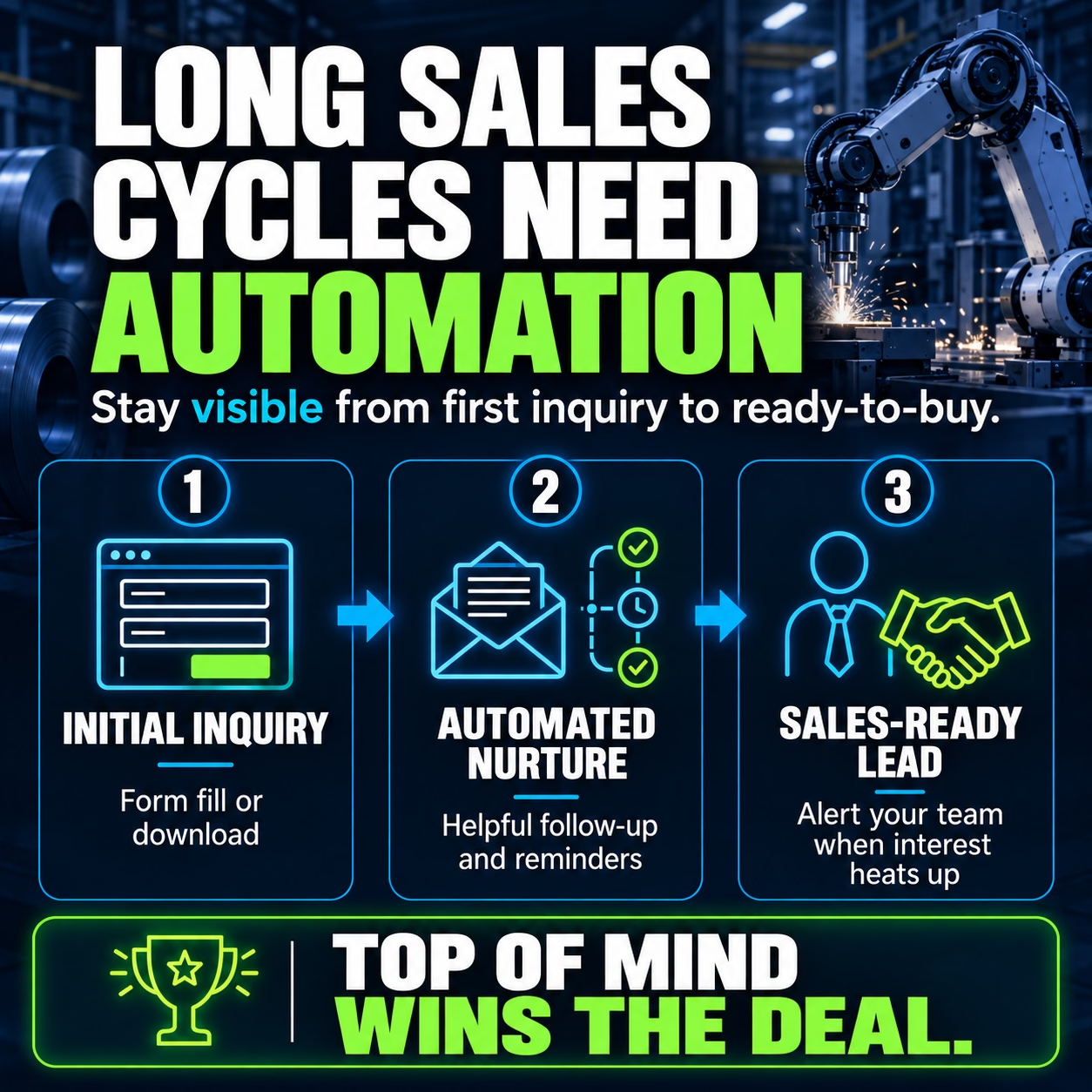
Why manufacturing sales are perfect for automation.
Here's the thing about selling in manufacturing: the big-ticket sales cycle is long. Really long.
Your buyers can run from SME manufacturers to small shops to serious hobbyists, and a small-shop or hobbyist order can close the same afternoon. But on custom tooling, production equipment, and complex builds, the decision involves multiple people. Engineers.
Purchasing managers. Finance. Sometimes executives.
And everyone's busy. Including you.
So what happens? A prospect fills out a form on your website. Someone on your team sends them a generic follow-up email.
Then... nothing. Because your sales team is focused on deals that are closer to closing, and this lead isn't ready yet.
Three months later, that prospect is ready to buy. But they're not calling you. They're calling the competitor who stayed in front of them.
That's the problem marketing automation solves. It keeps you top of mind during that long gap between initial interest and ready-to-buy, without requiring your team to manually follow up with every single lead every single week.
What marketing automation actually does.
Marketing automation isn't some magic button that turns leads into customers. It's a system that handles the repetitive, time-consuming parts of your sales process so your team can focus on the high-value work.
Here's what that looks like in practice:
Automated lead nurturing. When someone downloads a resource from your website or fills out a contact form, they automatically get added to a sequence of emails that educates them about your capabilities, shares case studies, and keeps you top of mind until they're ready to talk.
Lead scoring. The system tracks how engaged each lead is based on what they're doing. Are they opening emails?
Visiting your pricing page? Downloading technical specs? When they hit a certain threshold, your sales team gets notified that this lead is heating up.
Personalized follow-up. Instead of sending the same generic email to everyone, you can set up different sequences based on what someone's interested in. Someone looking for custom tooling gets different content than someone looking for production equipment.
Automated reminders and tasks. Your CRM can automatically remind your sales team when it's time to follow up with a prospect, schedule a demo, or send a quote. No more relying on memory or sticky notes.
Better data and visibility. You can see exactly where leads are getting stuck, which marketing channels are driving the most qualified leads, and how long it typically takes to close a deal. That means you can make smarter decisions about where to invest your time and budget.
The result? More leads get nurtured. Fewer fall through the cracks.
Your sales team spends their time talking to prospects who are actually ready to buy instead of chasing cold leads that aren't going anywhere.
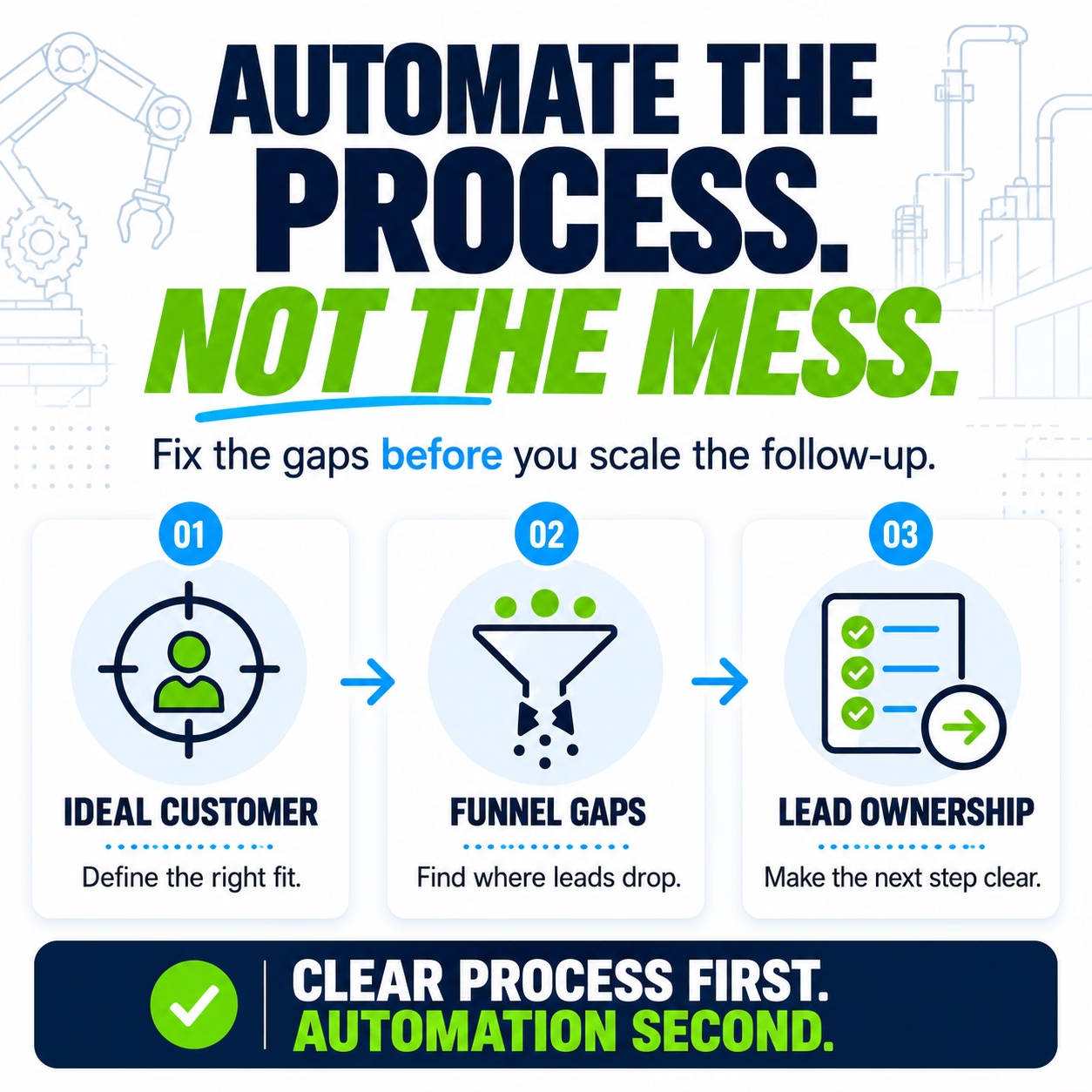
But first, you need to fix your process.
Here's the catch: marketing automation only works if you have a clear process to automate.
If your sales process is a mess right now, automation isn't going to fix it. It's just going to automate the mess.
So before you start shopping for software, you need to get clear on how leads actually move through your funnel. Where do they come from? What happens next?
Who owns each step? Where do they typically get stuck or drop off?
Most manufacturers I work with have never actually mapped this out. They know they get leads from trade shows, referrals, the website, maybe some Google Ads. And they know some of those leads turn into customers.
But there's a big black box in between where nobody's really sure what's happening.
That's the first thing to fix.
Here are four things you need to get clear on before automation will help:
1. Who's your ideal customer?
This might seem obvious, but you'd be surprised how many manufacturers are chasing leads that will never close because they don't actually fit the profile.
Get specific. What industries do you serve? What size companies?
What types of projects? What's the typical decision-making process?
The tighter you can define this, the better your automation will work. Because you'll be able to create messaging that speaks directly to the problems your ideal customer actually has.
2. Where are the gaps?
When and how do prospects fall through the cracks?
Is it after the initial inquiry when nobody follows up? Is it after you send a quote and then never check back in? Is it during the long gap between "interested" and "ready to buy" when you lose touch?
Figure out where leads are dropping off and why. That's where automation can have the biggest impact.
3. What are the sticking points?
Where do deals typically get stuck? Is it waiting on internal approvals? Is it because the prospect needs to get buy-in from their team?
Is it because they don't fully understand your capabilities?
Once you know where deals stall, you can build automation that addresses those specific roadblocks. Educational content. Case studies.
Technical specs. Whatever your prospects need to move forward.
4. Where are you doing double duty?
Are multiple people on your team reaching out to the same prospect with the same message? Are leads getting passed around without anyone actually owning the relationship?
Duplicative effort is one of the most common issues I see. It wastes time, confuses prospects, and makes your company look disorganized.
Automation can help here by making it crystal clear who owns each lead and what the next step is. No more guessing. No more overlap.
How Peak 10 Marketing helps manufacturers implement automation.
Look, I get it. You've got a business to run. You don't have time to become a marketing automation expert.
That's where we come in.
At Peak 10 Marketing, we work with manufacturers like you to build sales and marketing systems that actually work. We don't just hand you a piece of software and wish you luck. We help you map out your process, identify the gaps, and build automation that fits how you actually sell.
Here's what that looks like:
We audit your current process. We look at how leads are coming in, what's happening to them, and where they're getting stuck. We identify the biggest opportunities to improve conversion rates and speed up your sales cycle.
We build automation. Based on what we find, we set up email sequences, lead scoring, CRM workflows, and everything else you need to keep prospects engaged from first contact through close.
We create the content. Automation only works if you have something valuable to send. We help you develop case studies, technical resources, industry-specific content, and other assets that keep prospects moving through the funnel.
We train your team. Your sales team needs to know how to use the system, what to do when a lead gets hot, and how to follow up effectively. We make sure everyone knows their role.
We optimize over time. Marketing automation isn't set-it-and-forget-it. We monitor what's working, test new approaches, and continuously improve your results.
The manufacturers we work with typically see results within 60 to 90 days. More qualified leads. Shorter sales cycles.
Higher close rates. And their sales team actually has time to sell instead of drowning in manual follow-up.
Lead magnets: what feeds the automation.
What you actually want is a system that brings qualified prospects to you. A steady stream of leads who already know who you are, understand what you do, and are interested in learning more.
That's what attraction marketing does. Instead of hunting down prospects, you create something valuable that pulls them in. They come to you because you're offering information they actually need.
And the best way to make lead generation for manufacturers work? Create a lead magnet that's worth their time.
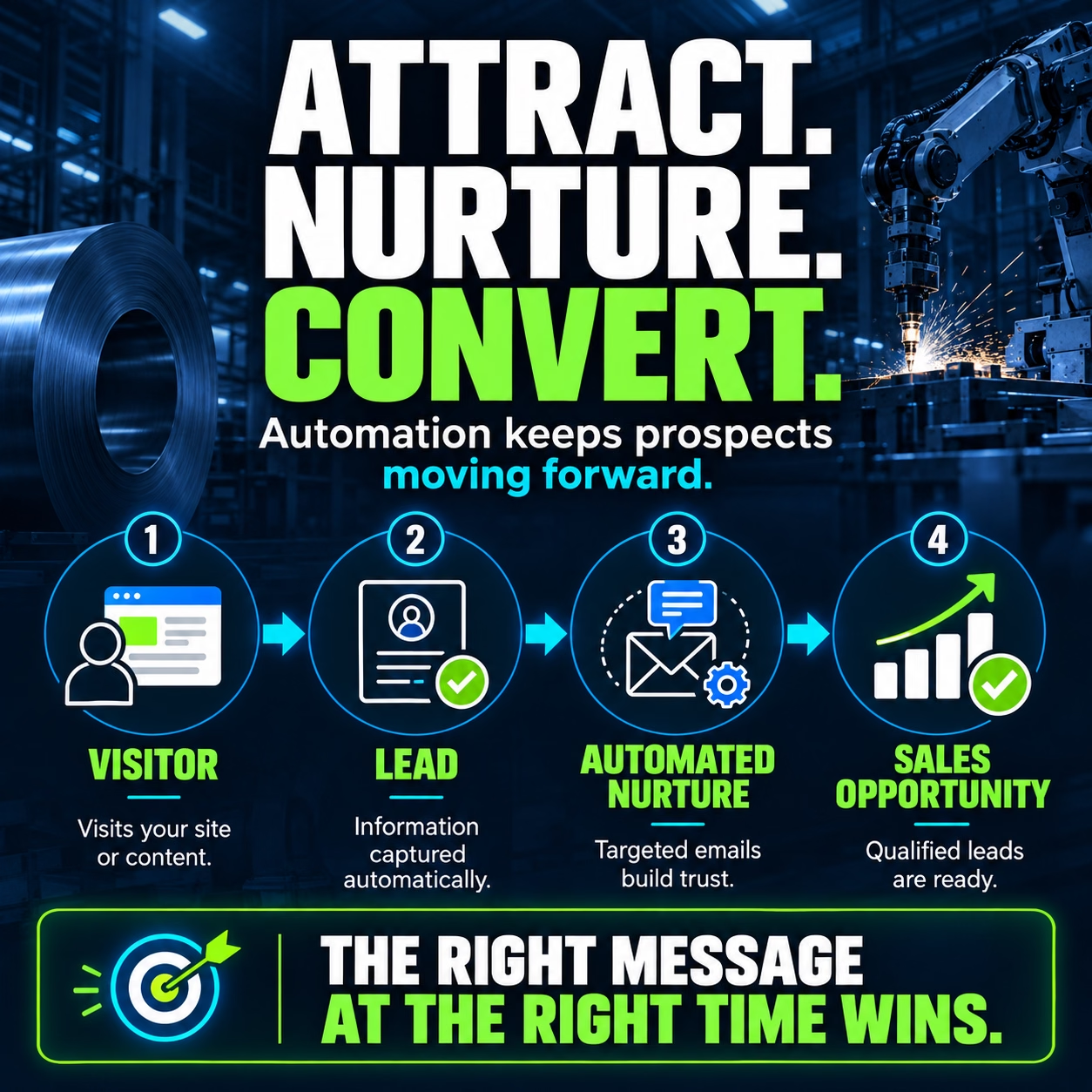
Why lead magnets matter for manufacturers with long sales cycles.
Here's the thing about selling tools, equipment, and custom manufacturing: the sales cycle is long. Sometimes really long.
A prospect might visit your website today, download something, and not be ready to buy for six months. Maybe a year. By the time they're ready to pull the trigger, they've forgotten about you.
Or worse, they remember you existed but can't find your information anymore because it's buried in their inbox or lost in a stack of trade show materials.
That's why capturing their information early is so critical. When someone downloads your lead magnet, you get their contact info. And more importantly, you get their first touch point data.
Where they came from. What they were interested in. What problem they were trying to solve.
That data becomes invaluable later when you're trying to connect the dots between your marketing efforts and actual sales. Because in manufacturing, the attribution window is often way longer than any analytics platform can track. You need to capture that first interaction so you know what actually drove the deal when it finally closes.
But here's the catch: your lead magnet has to be good enough that someone actually wants to give you their information. It can't just be a generic company brochure or a "contact us for more info" button.
It needs to solve a real problem. And it needs to meet three specific criteria.
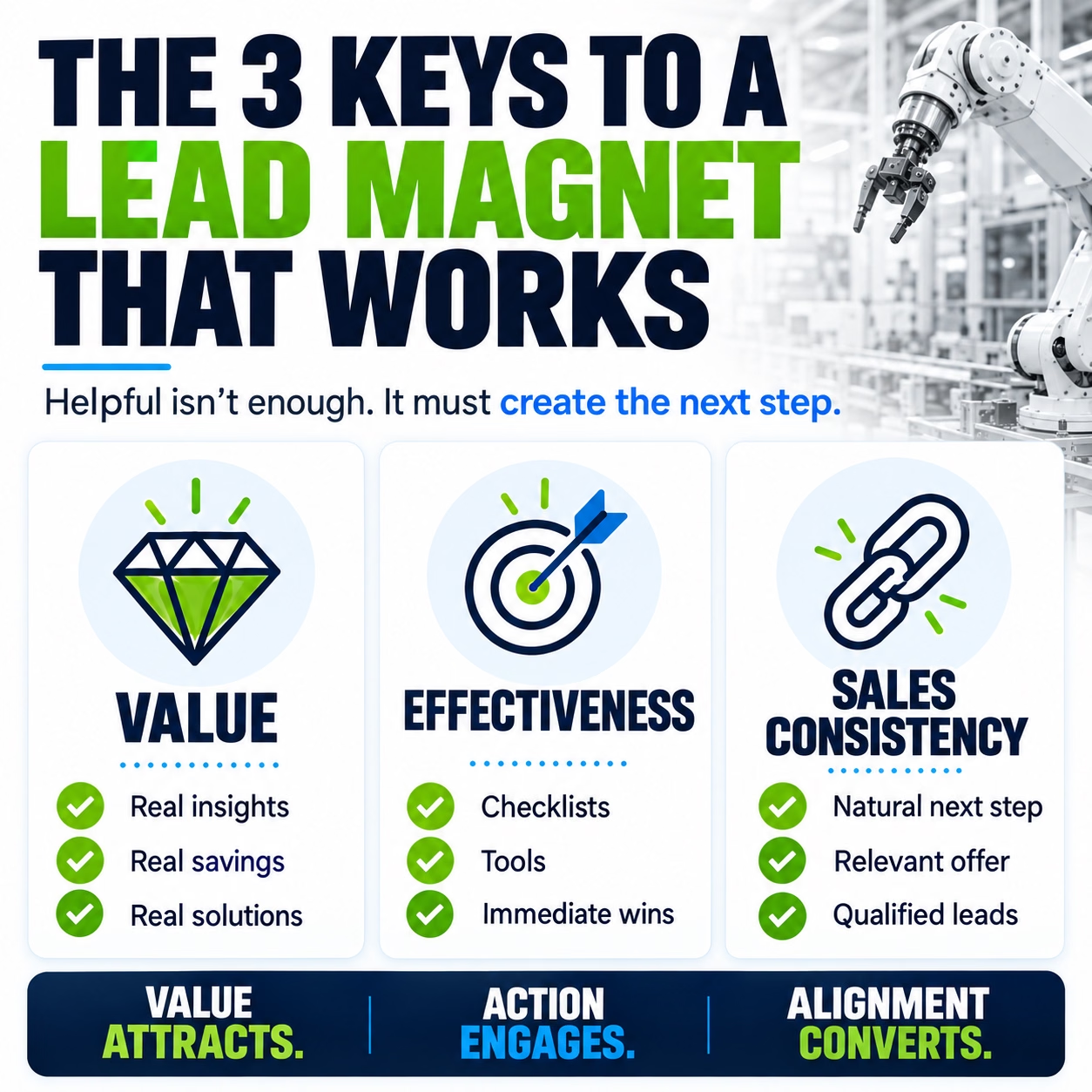
The three keys to a lead magnet that works.
Most businesses use lead magnets in some form. But most of them are garbage. They're either too vague, too salesy, or they don't actually help the prospect.
If you want a lead magnet that actually generates leads (and qualified ones at that), it needs to hit three marks:
1. Value
Your lead magnet has to be worth something to your prospect. Not just theoretically valuable. Actually useful.
If you're offering a free consultation or assessment, you need to deliver real insights. If it's a guide or resource, it has to teach them something they can use right away.
The higher the perceived value, the more likely they are to not only download it but also engage with you further down the line.
Good example: A manufacturer of industrial ovens offers a free guide on "Total Cost of Ownership: What You're Really Paying for Industrial Heating Equipment." It breaks down energy costs, maintenance schedules, typical part replacement intervals, and lifetime operating costs across different brands and models. A prospect downloads it, runs the numbers on their current equipment, and realizes they're burning $30K a year more than they should be.
Bad example: The same manufacturer offers a "free consultation" but uses the entire call to pitch their products without diagnosing the prospect's actual situation or offering any useful insights they can apply on their own.
The good example gives value upfront. The bad example is just a sales call disguised as something helpful.
2. Effectiveness
Value alone isn't enough. Your lead magnet also needs to be actionable.
If someone downloads your resource, they should be able to implement something immediately and see a result. It can't just be theory or high-level concepts. It has to have teeth.
Good example: A custom tooling manufacturer creates a one-page PDF called "5 Questions to Ask Before You Spec Your Next Fixture." It's a simple checklist that walks prospects through common mistakes that lead to rework, delays, and cost overruns. They can literally print it out and use it in their next vendor meeting.
Bad example: The same manufacturer publishes a white paper on "The Importance of Precision Tooling in Modern Manufacturing." It's full of general observations but doesn't tell the prospect how to actually evaluate tooling suppliers or what to look for in a quote.
The good example is specific and actionable. The bad example is just content for the sake of content.
3. Sale Consistency
This is the one most manufacturers miss. Your lead magnet can't just be a random piece of helpful content. It needs to naturally lead into what you actually sell.
Too many companies give away free information with no connection to their services. Then they wonder why prospects download their stuff but never become customers.
You're not running a charity. You're using the lead magnet to start a relationship that eventually turns into a sale. There needs to be a clear progression from the free value you're providing to the paid solution you're offering.
Good example: A manufacturer of CNC equipment offers a resource guide on "How to Calculate ROI on Your Next Machine Tool Purchase." Throughout the guide, they reference case studies of companies who used their equipment and the specific results they achieved. At the end, they offer a free ROI assessment using their proprietary calculator.
The entire experience is framed around the idea that this is what they help customers do every day.
Bad example: The same manufacturer promotes a free guide on "Everything Your Competitor Doesn't Want You to Know About CNC Machining" with no mention of their products or services. Prospects download it expecting insider secrets. When the manufacturer follows up with a sales pitch, it feels like a bait and switch.
The good example positions the lead magnet as a preview of what it's like to work with them. The bad example draws in tire kickers who just want free information.
Lead magnet ideas for manufacturers.
You don't need some elaborate, tech-heavy piece of content. Simple works fine as long as it hits the three keys above.
Here are some ideas:
Cost comparison guides. If you're selling equipment, create a breakdown of total cost of ownership across different brands or models. Include purchase price, installation, energy use, maintenance, parts, typical lifespan.
Prospects will use this to justify budget internally.
Spec checklists. A one-page PDF that walks prospects through what to consider before they spec their next project. Questions to ask.
Common mistakes to avoid. Red flags to watch for.
Capacity planning calculators. If you're selling production equipment, create a simple tool that helps prospects figure out if they actually need another machine or if they can optimize what they already have.
Industry benchmarking data. If you've got data on typical lead times, failure rates, or performance metrics across your customer base, package it up. Prospects love knowing where they stack up against peers.
Technical resource guides. Material selection guides. Tolerance references.
Maintenance schedules. Anything that helps them do their job better.
Quiz or assessment. "Is Your Current Supplier Costing You Money?" A short quiz that helps them diagnose problems and gives them a scorecard at the end.
The key is to make it specific to the problem your ideal customer is trying to solve. And make sure it naturally connects to what you sell.
Bottom line.
You've spent years optimizing every other process in your business. Your sales and marketing process deserves the same attention.
Marketing automation isn't about replacing your sales team or taking the human element out of selling. It's about making sure no lead falls through the cracks, keeping your company top of mind during long sales cycles, and giving your team the time and information they need to close more deals.
If you're still doing everything manually, you're working too hard and leaving money on the table.
Let's talk about what automation could do for your business. Schedule a Growth Engineering Session and we'll walk through your current process, identify the biggest opportunities, and show you exactly how we'd build a system that drives real results.

Related Resources
Learn More About the Future of Digital Marketing
The future belongs to those who build it. Discover how to engineer marketing systems that perform as precisely as your production line.