Industrial Marketing: A Practical Guide for Mid-Market Manufacturers

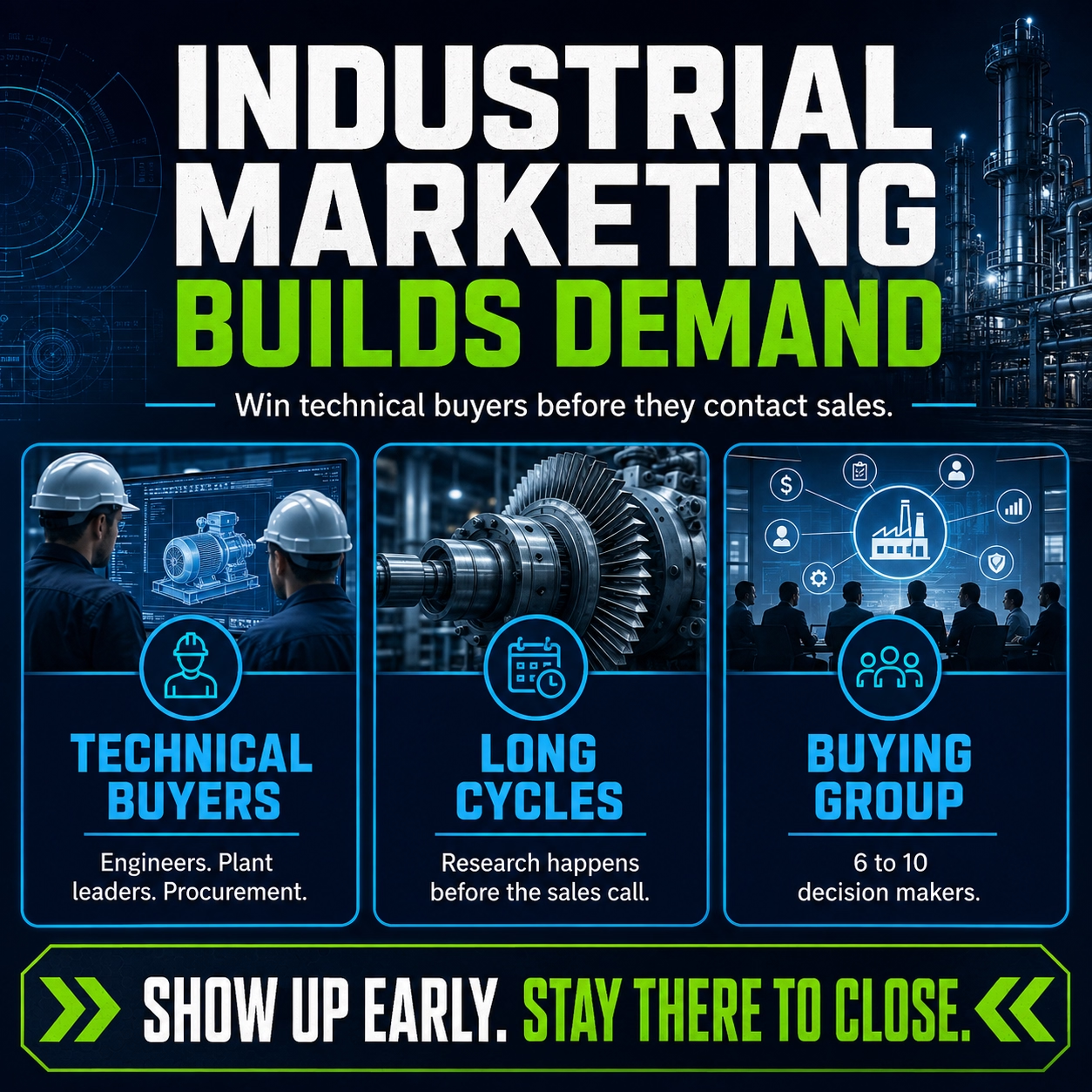
Industrial marketing is how manufacturers and industrial suppliers generate demand for technical products, sold to buyers who care about specs, tolerances, lead times and total cost of ownership. It is not consumer marketing scaled down. And despite what most of the guides on this topic assume, it is usually not being run by a marketing department either.
Here is the number that should change how you read every other article about this. There are 239,265 manufacturing firms in the United States. 98.3% of them have fewer than 500 employees, 93.1% have fewer than 100, and about three quarters have fewer than 20 (Census SUSB 2022, via NAM).
Most industrial marketing advice is written for the other 1.7%. This guide is not.
What this guide covers:
- What industrial marketing is, and who it is actually for
- What changes when you sell to businesses, to consumers, and through dealers at the same time
- How to build the strategy, step by step, with no marketing team
- What it costs, in real numbers
- How to measure it when the sale closes offline months later
- The marketing frameworks people ask about, answered plainly
Peak 10 is a manufacturing marketing agency built for this end of the market, and every engagement is measured against closed deals.
What is industrial marketing?
Industrial marketing is the practice of promoting and selling products, components and services into industrial supply chains: manufacturing, machining, automation, materials, MRO and capital equipment. The defining trait is the buyer.
In consumer marketing you persuade one person to make a fast, low-risk decision. In industrial marketing you help a technical buyer reduce the risk of a considered purchase, and often you help several people do that at once.
The content has to be accurate enough to survive an engineer reading it. The person who finds you first is rarely the person who signs. Your job is to be useful early and still be there when they are ready.
Who industrial marketing is actually for
Read the major guides on this topic and you will meet the same company every time. It has a marketing department. It has a formal buying committee with five or six roles. Its sales cycle runs six to eighteen months. It buys capital equipment.
That company exists. It is also 1.7% of American manufacturing.
The other 98.3% look different. A 14-person shop where the owner does the quoting, the scheduling and, on a bad week, the marketing. A family business in its second generation. A shop with three good customers and a nervous feeling about what happens if one leaves.
Those firms are not small versions of the big ones. They have different problems.
What actually keeps a mid-market manufacturer up at night
Not attribution models. Owners we work with talk about finding work, about the backlog, about being slow, about what to charge. The vocabulary is different because the problems are different.
When a shop is slow, the question is not “how do we improve our lead-to-MQL conversion rate.” The question is “where does the next job come from, and how fast.” When a shop is busy, the question flips to whether marketing should be turned down so the floor can catch up. No agency guide covers that second problem at all.
The measurable difference is time. A 200-person manufacturer has someone whose job is marketing. A 14-person shop has an owner with four hours a month, and every one of those hours costs the business something else.
The two numbers that shape everything
About 5% of your addressable market is ready to buy this quarter. That is the 95-5 rule, from the Ehrenberg-Bass Institute, and it means a campaign judged on this month's leads will look like a failure when it is simply early.
The second number is speed. Harvard Business Review research found that following up within an hour gives you roughly seven times better odds of reaching the decision maker (Oldroyd, McElheran and Elkington, 2011). For a small shop that is good news, because speed is one of the few advantages you have over a larger competitor.
How industrial marketing differs from consumer marketing
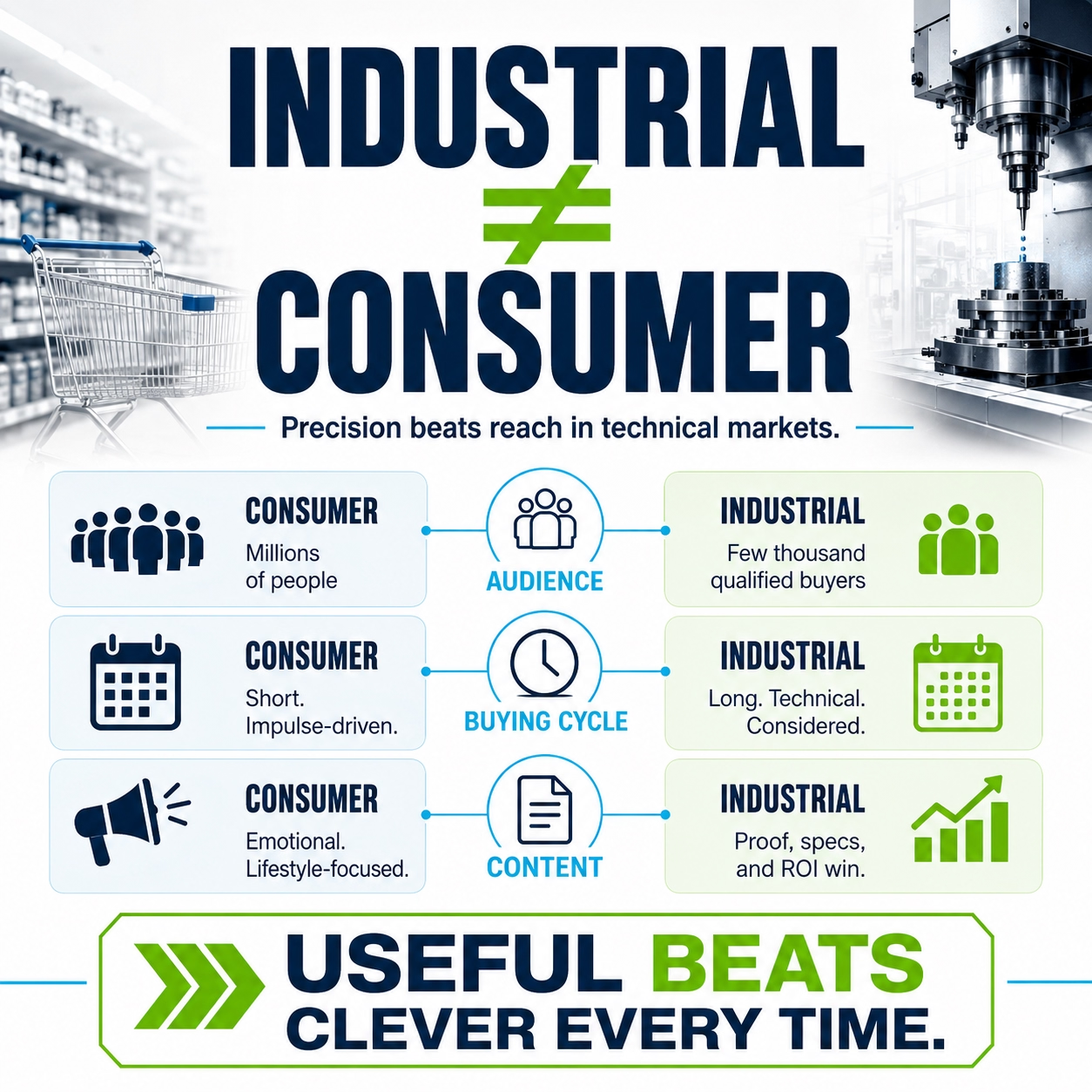
Three differences drive most of the strategy.
First, the audience is small and specific. You are not chasing millions of impressions. You are trying to reach a few thousand qualified buyers in a defined set of industries and job titles. Precision is worth more than reach, which is the whole argument in our guide to niche versus mass marketing.
Second, the buying cycle is considered and technical. Nobody swaps a supplier on impulse. Trust builds across many touches: a spec sheet downloaded, a comparison read, a review checked, a quote requested weeks later. Your marketing has to compound instead of expecting one ad to close a deal.
Third, the content bar is higher. Vague claims get ignored. Engineers and buyers want numbers, tolerances, certifications and proof. Marketing that reads like a brochure loses to marketing that reads like an operator who has run the equipment.
What changes when you sell three ways
This is the part almost nobody writes about, and it is the reality for a large share of manufacturers.
You sell to businesses. You may also sell direct to consumers through your own site. You may sell through dealers or distributors who are, on a good day, partners and on a bad day competitors for the same order.
One of our client's product line has been bought by a global EV maker and by the small dental lab across town. Another sells to worldwide car dealerships and to the local home-brew hobbyist. Those are not different companies. They are the same company on a Tuesday.
The three methods of selling need different scoreboards
The business deal runs on quotes, and the numbers that matter are quote volume, close rate and cycle length. The direct order closes today, and the numbers are return on ad spend and average order value. The dealer channel is measured on sell-through, and half the time you cannot see it at all.
Judge all three on the same dashboard and you will kill a good channel. We have watched manufacturers cut paid search because cost per lead looked high, when that channel was producing the quotes that closed six months later at the highest average order value in the business.
The dealer problem nobody names
If you sell direct and through dealers, your own website is a competitor to your channel. That is not a marketing problem you can solve with better copy. It is a policy decision about pricing, territory and lead routing that has to be made before the marketing runs. On one hand, you may be increasing your visibility and lead times for delivery. On the other, you are reducing your margins and competing with your dealers on platforms like Google, increasing your ad costs.
How to build an industrial marketing strategy
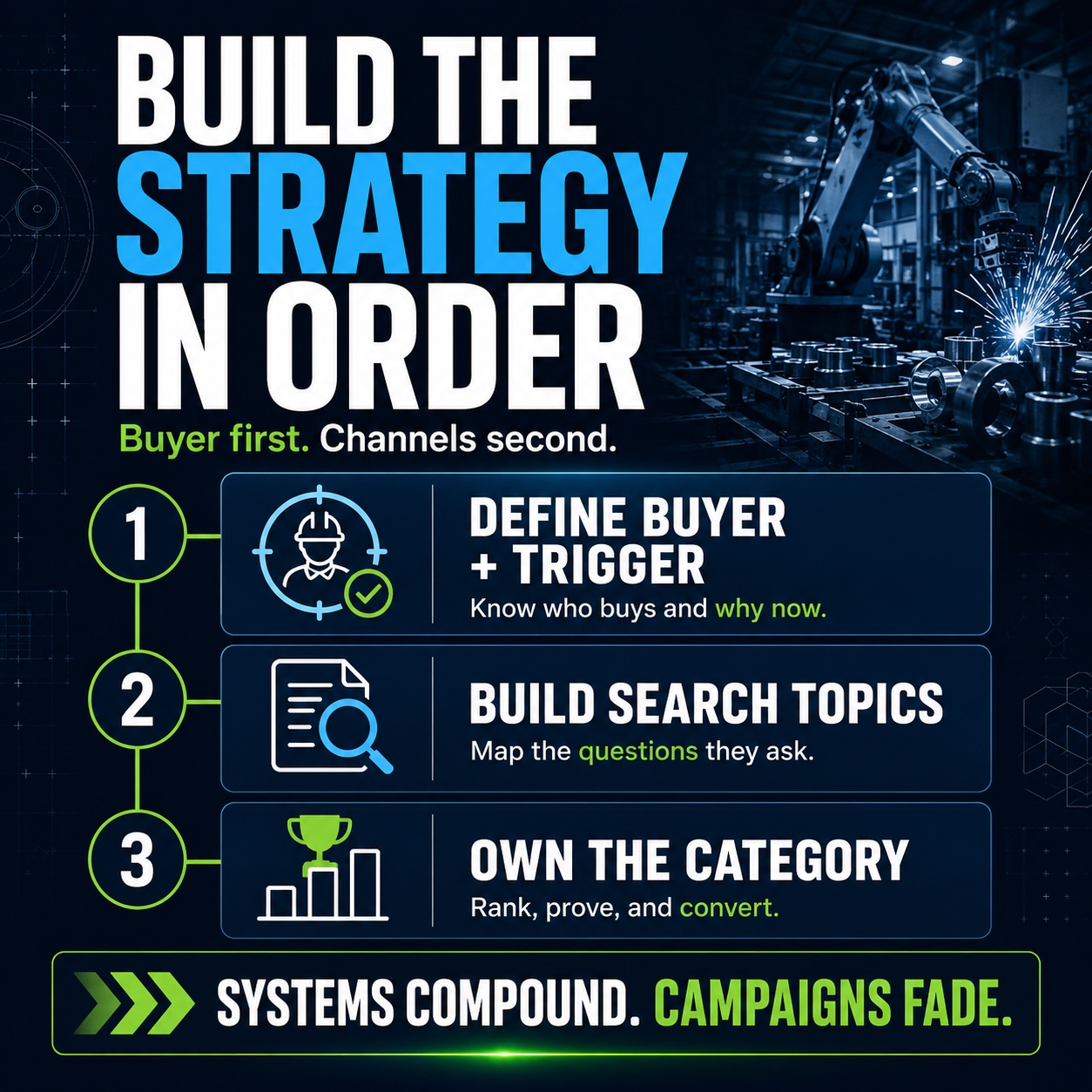
Here is the sequence that works for a manufacturer with a real product and a limited budget.
1. Pull your last 50 won deals
Before you buy a single click, find the pattern already in your business. Vertical, application, company size, buyer title, deal size, how they found you. That pattern is your real target market, not the one on your About page.
This costs nothing but an afternoon, and it is the highest-return hour in the whole process.
2. Name the trigger
Buyers do not wake up wanting a heat treat oven. Something happened. A line expanded, a quality problem surfaced, a supplier retired, a contract reshored. If you know the trigger, you know what to publish and when to show up.
3. Write the argument that wins
What did the buyers who chose you believe that the ones who did not never understood? That belief is your core sales argument. Every headline, ad and page exists to install it.
Precision Quincy did not win on “we make ovens.” They won on a specific argument for a specific buyer, and that argument ran through everything. They built custom ovens that were the "Perfect Fit". This saved time and money for their clients.
4. Build a topic map from what buyers actually search
List the questions a buyer asks before they contact you. Application questions, comparison questions, cost questions, integration questions. Each becomes a page. Prioritize the ones with real search demand over the clever ideas nobody looks for.
5. Own the search results for your category
For most manufacturers this is the highest-return channel because the intent is already there. Our SEO for manufacturers playbook covers the build.
6. Give sales the assets to close
Marketing does not end at the lead. Case studies, spec comparisons, cost calculators and technical FAQs shorten the cycle and answer objections before they stall a deal.
7. Run it as a system, not a campaign
Campaigns fade. Systems compound. That is the whole idea behind the Modular Marketing System: discrete modules, each measured, each tied to output, added one at a time instead of all at once.
The channels that work, and which two to start with
Very few companies should be running on the majority of the available marketing platforms. Pick one or two based on how work finds you today.
If most of your jobs come from people who already know what they need and go looking, start with search and Google Ads. Search builds over time. Ads buy traffic while it builds.
If most of your work comes from relationships and repeat orders, and the backlog has gone quiet, start with email and automation, then add paid social to widen the top.
If you sell through dealers or distributors, start with dealer enablement and search.
Add a third channel only after the first two produce quote requests you can trace back to a source.
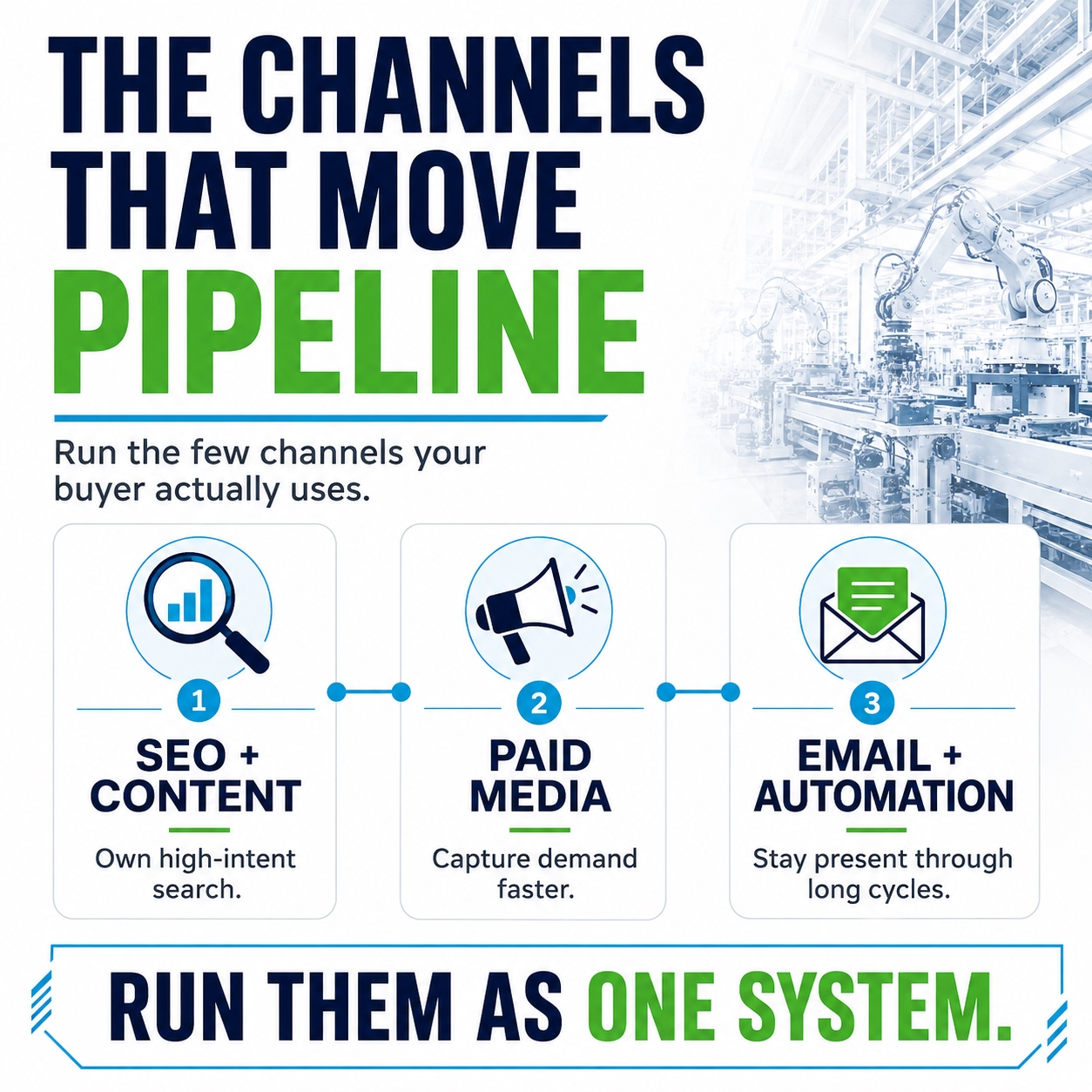
Search and content (SEO)
For: getting found by the 95% who research quietly before they ever call.
Speed: first movement in 60 to 90 days, closed revenue in months 4 through 9.
Cost: your time, or $2,000 to $6,000 a month.
Google Ads
For: catching buyers already typing what you make into Google.
Speed: days, and it stops the day you stop paying.
Cost: $3,000 a month minimum before the data tells you anything.
Meta and paid social
For: reaching buyers before they start looking.
Speed: weeks, and it needs a steady supply of fresh creative.
Cost: $1,500 to $5,000 a month.
Email and automation
For: staying in front of a long cycle without adding headcount.
Speed: immediate on a list you already have.
Cost: under $300 a month in tooling.
Trade shows
For: relationships and getting specified into a job.
Speed: months, and only if someone actually works the follow-up.
Cost: $5,000 to $40,000 per show.
Dealer and distributor enablement
For: making it easy for your channel to sell you instead of the other guy.
Speed: quarters.
Cost: mostly internal time.
Three things worth knowing before you spend
Search Engine Optimization is the only channel here that keeps earning after the invoice stops. Every other one resets to zero the month you stop paying. That is why it belongs in the first two for most shops even though it is the slowest to show up.
Never scale a paid channel until you can see which clicks became quote requests. Doubling a budget you cannot trace just doubles the guessing. The Google and Meta ads guide covers running both without lighting money on fire.
Most orders in a considered purchase close after five or more follow-ups, and most shops follow up once. That gap is the cheapest thing on this page to fix, and it is what marketing automation is actually for.
For the full channel-by-channel build, see digital marketing for manufacturers.
What industrial marketing actually costs
Almost nobody in this industry publishes numbers. We looked at the pages that rank for this topic and not one of them gives a range. So here are ours, from real engagements. Those three numbers are also published on our pricing page.
A technical and content audit runs $5,000 to $15,000 depending on site size, and in our engagements has produced 30% to 100% pipeline lift over the following twelve months.
A working paid program needs at least $3,000 a month in media spend before the data means anything. Below that you are not running a campaign, you are running a sample size too small to learn from.
A full system, meaning strategy, content, paid, automation and the measurement that connects them, generally starts near $10,000 a month for a mid-market manufacturer and scales with the ad budget.
One useful reference point from our own client data: a manufacturer spending $18,000 a month on Google Ads was getting 60 leads at roughly $300 each. We changed what the campaigns optimized toward, from raw leads to actual quote requests. Ninety days later they had 35 leads instead of 60, and 18 of them were asking for quotes. Fewer leads, far more real buyers, same budget.
The number that matters is not what you spend. It is whether you can trace what you spend to a closed deal.
Measuring it when the sale closes offline
Here is the gap in almost every guide on this subject. They will tell you the sales cycle runs six to eighteen months. Then they list attribution models, first touch, last touch, multi-touch, time decay, and stop.
None of that solves the actual problem. If the deal closes on the phone nine months after the click, your ad platforms never see it. Google and Meta keep optimizing toward whatever fills a form, because a form fill is the last thing they can observe.
Left uncorrected, the platforms will quietly spend your budget on the campaigns that produce the most cheap leads and the fewest orders.
What to do instead
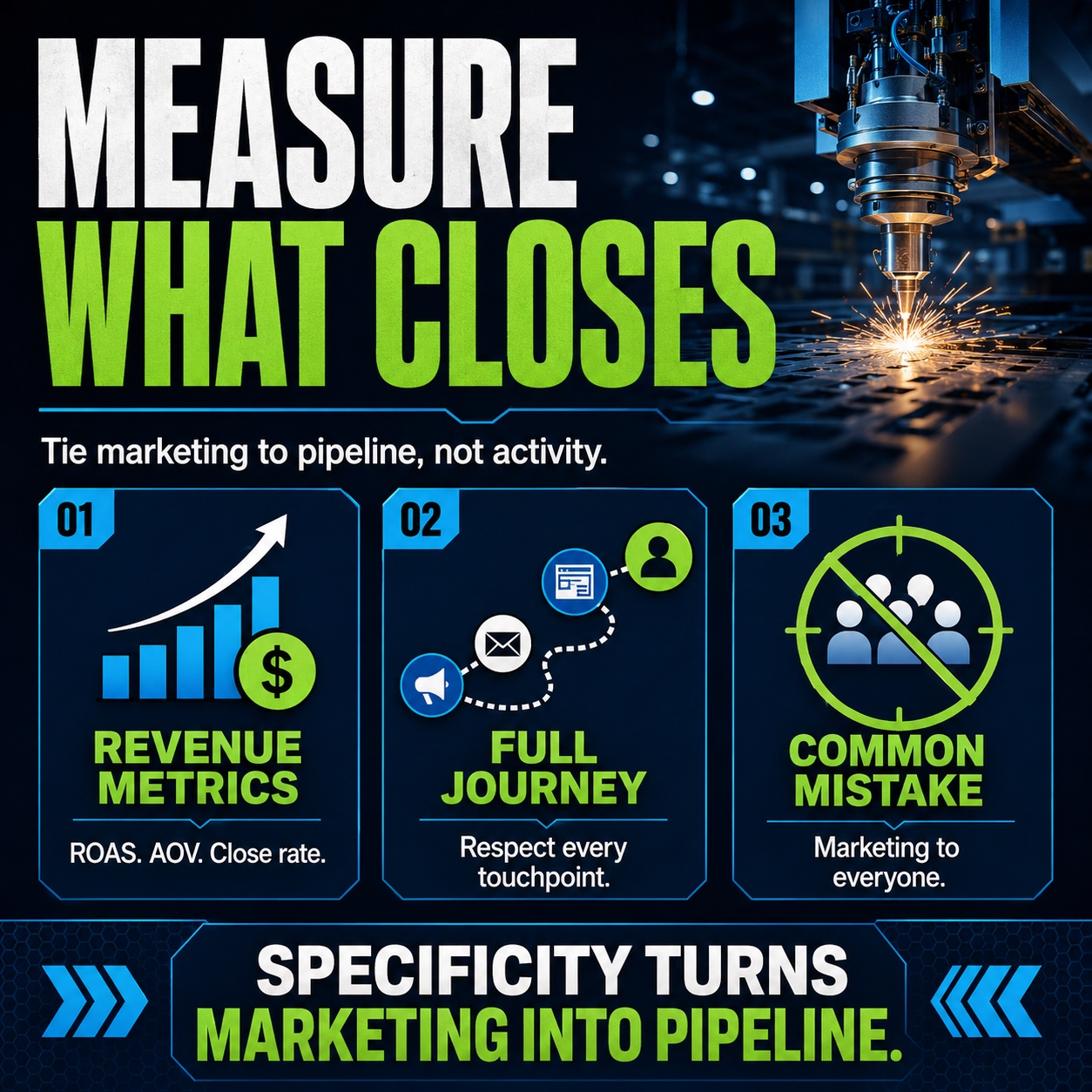
Track the buyer as milestones rather than as a single conversion. Click, then lead, then call, then quote, then demo, then close. (These vary based on your product) Report on cost per quote and cost per closed deal, not cost per lead.
Then feed the closed-deal data back to the platforms so they optimize toward revenue. That is the core of our M2CO method, and in our engagements it recovers 40% to 60% of the attribution that normally vanishes between the click and the close. Broken attribution costs a typical manufacturer 30% to 40% of an ad budget per quarter, which is money already spent on channels nobody can defend.
The detail is in how manufacturers connect offline sales to ad spend.
The metrics worth reporting
Quote volume by source. Close rate on marketing-sourced quotes. Cost per quote. Cost per closed deal. Average order value by channel. Cycle length.
Notice what is missing. Impressions, likes, and raw lead count are not on that list, because none of them survive a conversation with an owner who wants to know whether the money worked.
Running this with no marketing team
Most guides quietly assume somebody owns this full time. If that is not true for you, the sequence changes.
Do these in order, and do not start the next until the previous one runs without you.
- Fix the foundation first. Connect the CRM and conversion tracking so you can see which clicks become quotes. Everything after this is guesswork without it, and this is the step most shops skip.
- Turn on one channel. The one your buyer already uses. Usually paid search if you need work this quarter, search and content if you are building for next year.
- Automate the follow-up. A quote request that sits for two days is usually a lost quote request. Send triggers to your sales team if you prefer to do this manually.
- Fix the quote page. More mid-market manufacturers lose deals on a bad quote form than on bad advertising.
- Add the second channel only when the first is measurably producing.
Four hours a month, spent in that order, beats forty hours spent in the wrong order. That is not a motivational line, it is what the sequencing does.
The marketing frameworks people ask about
These come up constantly in searches around this topic and almost no industrial marketing guide answers them. Here they are, plainly, with what each is actually worth to a manufacturer.
What is the 40-40-20 rule in marketing?
It comes from direct marketing, usually credited to Ed Mayer in the 1960s. 40% of your result comes from the list, meaning who you reach. 40% comes from the offer. 20% comes from the creative.
For a manufacturer this is the most useful of the four, because it says the thing shops get backwards. Most spend their energy on the ad and almost none on who sees it. Fixing your targeting will do more than rewriting your headline.
What is the 80/20 rule in manufacturing?
Pareto's principle, applied to your business: roughly 80% of your revenue comes from about 20% of your customers, products or parts.
Run it on your own numbers before you run another campaign. In most shops we look at, one or two target markets drive the majority of their business, but marketing spend is spread evenly across 6-10 verticals. That is the single most common misallocation in a mid-market manufacturer's budget.
What are the 5 C's of a marketing plan?
The 5 C’s are Company, Customers, Competitors, Collaborators and Climate. It is a practical way to evaluate your position before deciding where to spend your marketing budget.
For manufacturers, that means looking at:
- Company: What do you make exceptionally well, where are your best margins, and what limits your capacity?
- Customers: Which industries, applications and buyers produce your most profitable work?
- Competitors: Who else is being considered, and where do you have a real advantage?
- Collaborators: Which dealers, distributors, manufacturers’ reps, suppliers and technology partners influence the sale?
- Climate: What is changing around the business, including regulations, reshoring, tariffs, labor availability, technology and supply-chain pressure?
Collaborators are often the most overlooked. Manufacturers may spend heavily generating demand without considering how dealers, distributors and reps will price, position, route or follow up on those opportunities.
The 5 C’s help expose those gaps before they become expensive marketing problems. But this is an analysis tool, not a marketing strategy by itself. Its value comes from using what you learn to select your target markets, sharpen your message and decide which channels deserve investment.
What is the 3-3-3 rule in marketing?
The 3-3-3 rule is used several different ways. At Peak 10 Marketing, ours is simple: target no more than three verticals, use no more than three marketing channels, and lead with no more than three core messages at one time.
The point is focus.
Every additional vertical needs its own research, content, landing pages and proof. Every additional channel requires budget, management and measurement. Every additional message creates another variable you need to test.
Three verticals multiplied by three channels and three messages already creates 27 possible combinations. Most mid-market manufacturers do not have enough traffic, budget or internal capacity to test all 27 effectively.
And three is a ceiling, not a requirement. Most manufacturers should begin with one or two proven verticals, two channels and one strong sales argument. Start with the markets already producing your best customers. Choose the channels those buyers actually use. Then build the message around the reason customers choose you over the alternatives.
For example, an industrial oven manufacturer might focus on aerospace, automotive and heat-treating companies. It could reach them through search, Google Ads and email. Its three core messages might focus on custom engineering, shorter lead times and lower total operating cost.
That is already a substantial marketing system to build, manage and measure.
Expand only after you can show which vertical, channel and message combinations are producing qualified quotes and closed revenue. Otherwise, adding more markets and channels does not create growth. It spreads the same budget across more activity and makes it harder to identify what is actually working.
Common industrial marketing mistakes
The most common one is marketing to everyone. A manufacturer trying to appeal to every industry ends up specific to none, and specificity is what technical buyers reward.
The second is treating marketing as a cost center that produces brochures rather than a system that produces quotes.
The third is scaling a channel before it can be measured. If you cannot see which clicks became quotes, adding budget just makes the confusion more expensive.
The fourth is judging a long-cycle channel on a short-cycle metric. Cut a paid campaign in month two and you will usually be cutting the one that would have produced month six's best deal.
What this looks like when it works
Precision Quincy, an industrial oven manufacturer, ran this kind of system to 54X return on ad spend in its first year, tripled qualified quote volume and generated $176M in qualified quotes and deals over twelve months. Their CEO, Matt Zakaras, put it this way: “Our biggest challenge today is keeping up with the influx of new quotes and orders that are coming into our business on a daily basis.”
American Rotary, which makes three-phase power converters and sells both direct and through dealers, has captured 61,954 leads, grown revenue 5.5X and raised average sale value 19% across a fourteen-year relationship.
Hot Shot Oven and Kiln went from zero to $4.7M in new revenue selling to knifemakers, glass artists and machinists, with a 74% increase in average order value.
Three different manufacturers, three different buyers, three different channels. Same system underneath.
Frequently asked questions

What is industrial marketing?
Industrial marketing is how manufacturers and industrial suppliers generate demand for technical products sold into supply chains: manufacturing, machining, automation, materials, MRO and capital equipment. Its defining feature is a technical buyer making a considered, risk-weighted purchase, often with other people involved in the decision.
Is industrial marketing the same as B2B marketing?
It is not a separate discipline. Industrial marketing is usually defined as B2B Account Based Marketing. But it is also frequently direct-to-consumer and dealer marketing at the same time, because a manufacturer's customer mix can span every buyer type and company size. What changes is not the fundamentals. It is the tracking and the page strategy, because a quote-based deal decided by a committee and a same-day online order require different measurement systems. And let's face it, even a non-enterprise company can take months or years to buy something from you. In fact, this is likely as the owner making a high ticket purchase is wearing many hats.
How much does industrial marketing cost?
A technical and content audit runs $5,000 to $15,000. A paid program needs around $3,000 a month in media before the data is readable. A full system with strategy, content, paid, automation and measurement generally starts near $10,000 a month for a manufacturer. What matters more than the number is whether you can trace the spend to a closed deal. Marketing isn't an expense, it's an investment. But you can only see this if you have the right tracking.
How long does industrial marketing take to work?
Paid search produces inquiries within days. Search and content typically show first movement in 60 to 90 days, with closed-deal revenue landing in months four to nine on longer cycles, but this can vary by your product. A well-built focused Modular Marketing system usually beats your existing baseline on cost per quote inside 90 days.
Does industrial marketing work for a small shop?
It works better, because speed is on your side. A 14-person shop can answer a quote request in an hour. A 400-person manufacturer might route it through three people first, and the HBR research says that hour is worth seven times the odds of reaching the decision maker. The constraint is not size, it is sequence: instrument the measurement, run one channel properly, automate the follow-up, then add the second.
Turn industrial marketing into quote flow
Industrial marketing rewards manufacturers who show up early, lead with discovery and a strong unique value proposition and build a system instead of chasing campaigns. If you want the version mapped to your buyers and tied to your CRM, that is what the Growth Engineering Session is for.
Thirty minutes. We review your last quarter of marketing and sales data and show you which activities are actually producing quotes. No pitch. Schedule your complimentary Growth Engineering Session.

Related Resources
Learn More About the Future of Digital Marketing
The future belongs to those who build it. Discover how to engineer marketing systems that perform as precisely as your production line.