Technical SEO for Manufacturers: The Foundation Most Sites Get Wrong

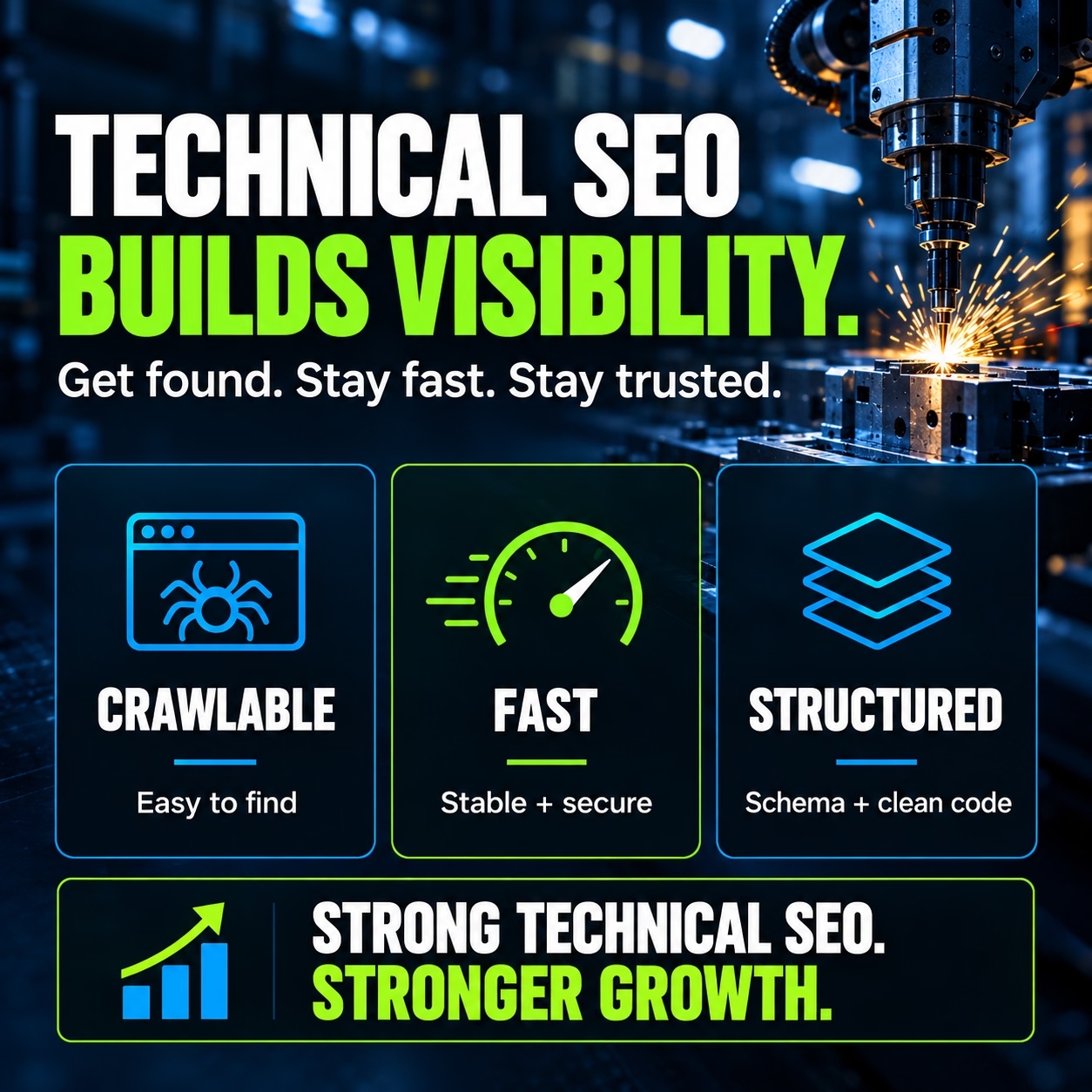
Technical SEO for manufacturers is the plumbing under everything else: page speed, mobile responsiveness, crawlability, internal links, and structured data that decide whether your content can rank at all. Most manufacturer sites fail one or more of the eight signals Google treats as foundational, which is why even great content sits buried.
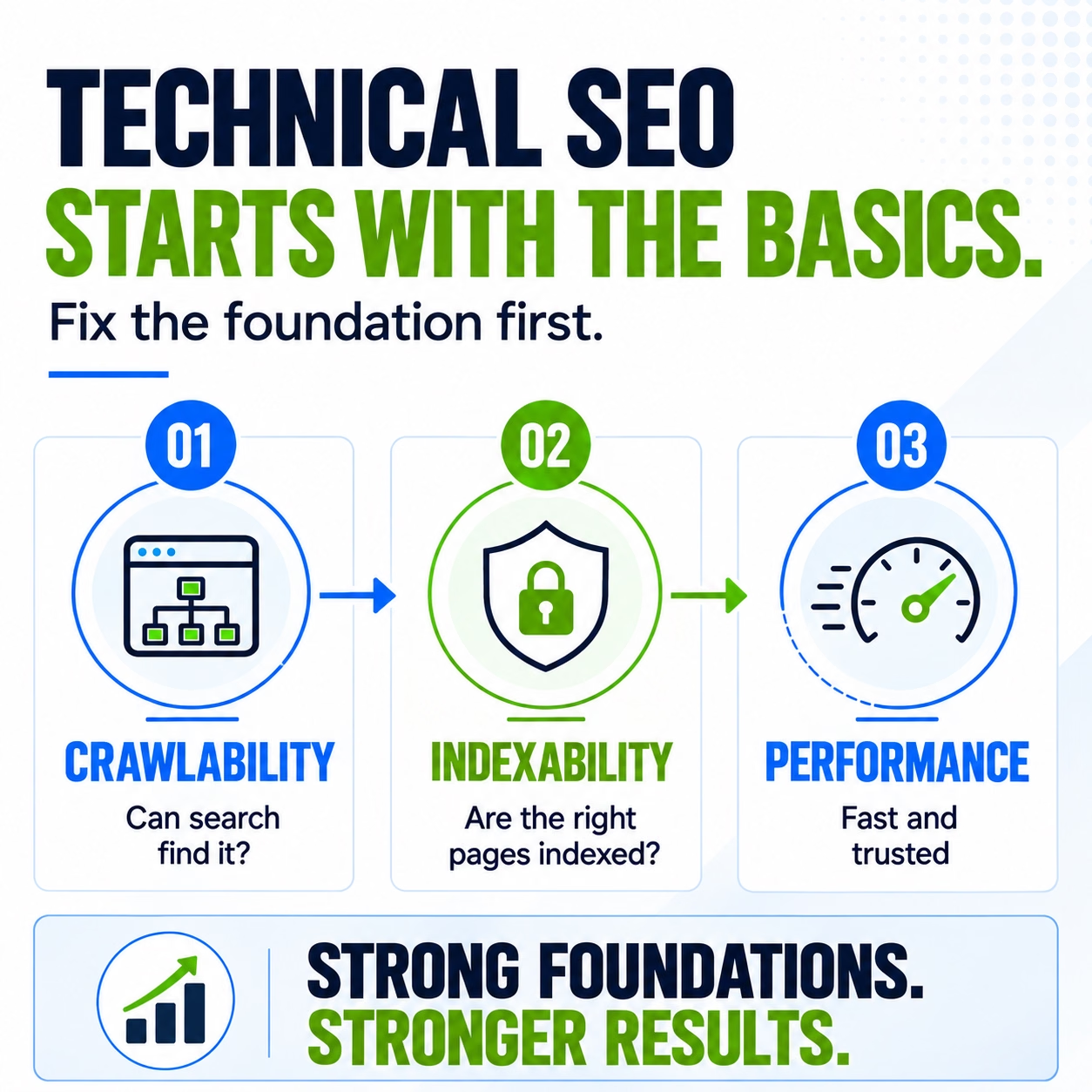
Fix the foundation first:
- The foundations: speed, mobile, crawl-ability, links, schema
- The bar: eight technical signals Google treats as table stakes
- The reality: strong content can't rank on a weak base
The fixes are not glamorous. They are also not optional. For the broader system, see the SEO for Manufacturers hub.
If you want it done for you, see our manufacturing SEO services.
The 8 technical SEO foundations
Most manufacturer technical SEO problems collapse into eight categories. Audit each, score it green/amber/red, and fix the reds first. The list is intentionally narrow.
Hundreds of technical SEO factors exist; these are the eight that consistently move organic traffic for manufacturer sites.
- Page speed and Core Web Vitals (LCP, INP, CLS).
- Mobile responsiveness and mobile-first indexing.
- Crawlability (robots.txt, blocked resources, JavaScript rendering).
- XML sitemap accuracy and submission.
- Internal link architecture (hub-and-spoke, breadcrumbs).
- HTTPS and security headers.
- Structured data implementation (covered in depth in the schema post).
- Canonical URLs and duplicate content handling.
Page speed and Core Web Vitals
Google measures page experience using Core Web Vitals, three specific metrics: Largest Contentful Paint (LCP), Interaction to Next Paint (INP), and Cumulative Layout Shift (CLS). LCP measures load speed, INP measures responsiveness to user input, CLS measures visual stability. All three are ranking signals.
Most manufacturer sites fail LCP because they load oversized hero images and uncompressed CAD-style product photos. The fix is image compression (WebP format), modern image-loading attributes (loading=lazy, fetchpriority), and a CDN. INP failures usually trace to slow JavaScript on product pages with complex configurators.
CLS failures trace to ads or images loading without reserved space. Each is fixable in days, not months.
Mobile-first indexing
Google indexes the mobile version of every site as the canonical version. For manufacturers, this means the mobile rendering of product pages, application pages, and blog posts is what Google ranks. Sites with desktop-only optimizations or content that disappears on mobile lose ranking authority.
Audit your mobile experience by viewing actual product pages on a phone, not by trusting a responsive-design template. Common manufacturer issues include unreadable spec tables, broken internal navigation, missing CTAs, and forms that fail to submit on mobile. Each of these is a closed-deal leak before it is a ranking issue.
Crawlability and XML sitemaps
Google crawls a manufacturer's site to discover and index pages. Crawl issues prevent ranking entirely. The most common crawl problems on manufacturer sites: robots.txt blocks that accidentally exclude important sections, JavaScript-heavy product pages that render content client-side, and orphan pages with no internal links pointing to them.
An accurate XML sitemap submitted to Google Search Console accelerates discovery of new and updated pages. Sitemaps should include only canonical URLs, exclude noindex pages, and update automatically when content changes. Most Webflow sites generate this correctly; many WordPress and custom sites do not.
Internal link architecture for hub-and-spoke content
Internal links pass ranking authority between pages and signal topical structure to Google. The strongest manufacturer SEO architectures use hub-and-spoke structures: a hub page covering the broad topic (like this SEO hub), with multiple supporting pages each covering a sub-topic in depth. Every supporting page links back to the hub.
The hub links to every supporter.
This cluster structure is what Google uses to identify topical authority. Manufacturers with flat site structures (every page linked from the navigation, no clear hierarchy) consistently underperform manufacturers with explicit hub-and-spoke organization. The Modular Marketing System contains a content architecture component for this reason.
HTTPS, schema, and canonical URLs
HTTPS is non-negotiable. Sites without HTTPS lose ranking authority and trigger 'Not Secure' warnings in browsers. Most manufacturer sites have HTTPS; the remaining failure mode is mixed content (HTTPS pages loading HTTP resources), which silently degrades trust signals.
Schema markup is covered in detail in its own post in this cluster. The short version: implement Product, Article, FAQ, and Organization schema on every relevant page. Schema is the most direct ranking signal manufacturers can add without touching content.
Canonical URLs prevent duplicate-content dilution. Set the canonical to the preferred version of each page, especially when the same content is reachable through multiple URLs (filtered category pages, parameterized URLs, www vs non-www).
The technical SEO audit checklist
A short checklist for an operator running a quick technical audit:
- Run the page through PageSpeed Insights. Check LCP, INP, CLS scores.
- View the page on a phone. Note any rendering, navigation, or form issues.
- Check robots.txt for accidental blocks.
- Submit the XML sitemap in Google Search Console and check coverage report for errors.
- Verify HTTPS is enforced sitewide and no mixed-content warnings appear in DevTools.
- Check Schema implementation with Google's Rich Results Test.
- Audit canonical tags on duplicate or parameterized URLs.
- Map the internal link structure: every important page should be 3 clicks or fewer from the homepage.
Frequently asked questions
How long does a technical SEO audit take?
A first-pass audit takes 4-8 hours for an experienced SEO. Implementing the highest-priority fixes typically takes 2-6 weeks of development time, depending on the platform and the depth of issues. Webflow sites tend to fix faster; legacy WordPress and custom sites take longer.
Can a manufacturer run technical SEO without a developer?
Some pieces (image compression, schema markup, basic on-page fixes) are within reach of an operator with Webflow access. Page speed optimization, structured-data validation, and JavaScript rendering issues usually require a developer. Plan for both.
What technical SEO mistake is most common on manufacturer sites?
Oversized images, by a wide margin. Manufacturers love high-resolution product photography and tend to upload uncompressed files. The result is LCP scores in the red, mobile experience problems, and ranking penalties.
Fixing image compression alone usually lifts page speed scores 20-40 points.

Related Resources
Learn More About the Future of Digital Marketing
The future belongs to those who build it. Discover how to engineer marketing systems that perform as precisely as your production line.