Digital Marketing for Manufacturers: The Channel-by-Channel Operator Playbook

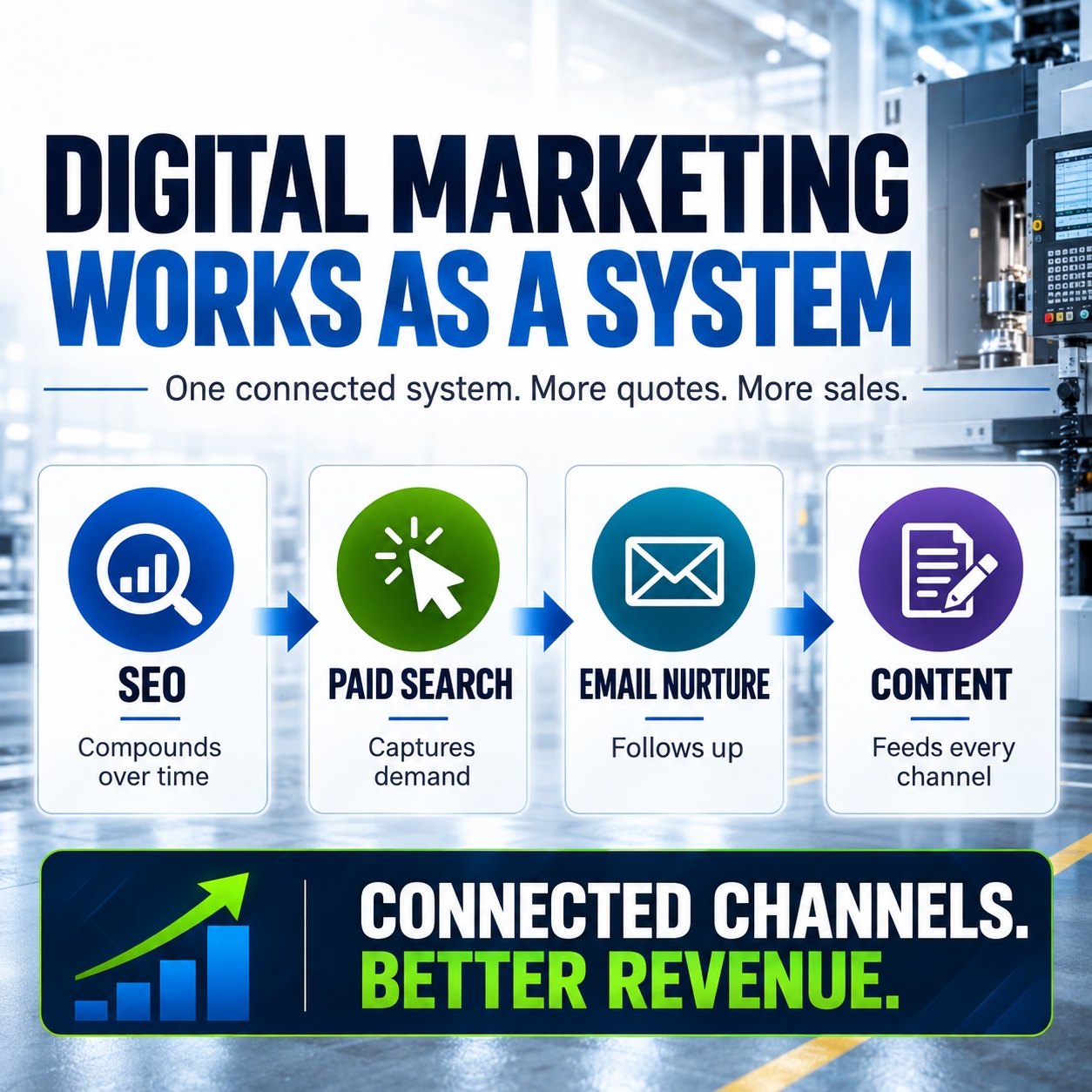
Digital marketing for manufacturers is the set of online channels, SEO, paid search, paid social, email, and content, run as one connected system that produces closed-deal revenue for a mid-market manufacturer. It is not "being on every platform." It is choosing the few channels your specific buyer uses and wiring them back to the sale.
Precision Quincy ran this kind of system to 54X ROAS in year one. Most manufacturers stall because they treat digital marketing as a set of disconnected tactics, so they cannot tell which channel produced a quote and which just produced activity.
Here is what each channel is actually for, and how to run them as one system instead of five hobbies.
This is built first for mid-priced products, the couple-thousand to low-tens-of-thousands range where most manufacturers live, often sold online and at volume with return on ad spend and average order value as the scoreboard. It scales up to the smaller set of high-ticket, engineered-to-order sellers too.
The channel mix and the cycle length change with the price of what you sell; the requirement to connect every click back to a closed deal does not.
Why manufacturers struggle with digital marketing
Two facts make manufacturing different from typical B2C digital marketing. First, only a small share of your market is ready to buy this quarter, so a channel judged only on this month's leads looks like it is failing when it is really just early.
Second, many manufacturing deals close offline, after the click, so the ad platforms never see the sale and quietly stop showing your best campaigns. Run digital marketing without accounting for those two facts and the budget feels random no matter how much you spend.
If you want it installed for you, see our Modular Marketing System packages.
The channels that matter, and what each one is for
You do not need all of these at once. You need the two or three your buyer actually uses, run well, before you add the next.
SEO: the channel that compounds
Search is where a manufacturer buyer goes when they have a problem to solve and are comparing options. Done right, it is the only channel where the same asset keeps earning traffic for years instead of resetting when you stop paying. For the full build, see the SEO for manufacturers playbook.
The short version: technical health, on-page relevance, and internal links decide whether you show up, and increasingly whether AI engines cite you at all.
Paid search and paid social: speed and precision
Where SEO compounds slowly, paid gets you in front of buyers now. Google Ads captures people already searching for what you make; Meta puts you in front of the buyer before they start looking. The Google and Meta ads for manufacturers hub covers how to run both without lighting money on fire.
The operator rule: never scale a paid channel until you can see which clicks became orders or quotes.
Email and marketing automation: working the 95%
Since most revenue closes after five or more follow-ups, the manufacturers who win are the ones who stay in front of the 95% who are not ready yet. Automated, behavior-triggered follow-up is how a small team does that without hiring five people.
This is the difference between a lead that ghosts and a lead that comes back months later ready to buy. For the build, see marketing automation for manufacturing, part of a broader lead generation for manufacturers system.
Content: the fuel every other channel runs on
Content is not a channel by itself so much as the fuel for the others. It is what SEO ranks, what paid social stops the scroll with, and what email nurtures with. The test is simple: would a real buyer forward it to a colleague?
See content marketing for manufacturers for what operator-grade content looks like.
The part most manufacturers skip: connecting it to revenue
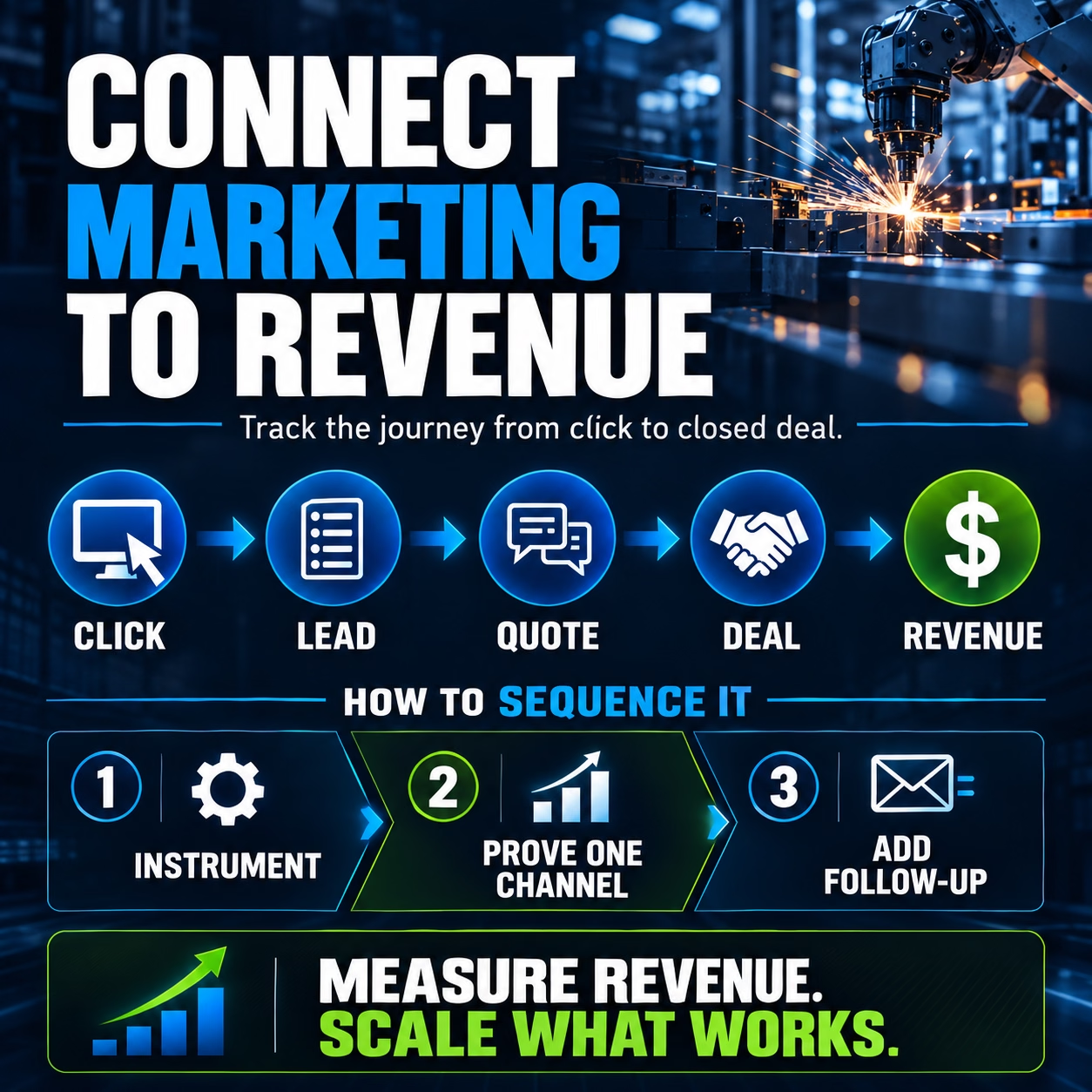
Here is what separates a real digital marketing system from a pile of channels. You have to connect the click back to the closed deal.
That is what M2CO does: it feeds your CRM's closed-deal data back to Google and Meta so the platforms optimize for revenue instead of clicks, and it recovers the 40% to 60% of attribution that normally vanishes between the click and the close. See how manufacturers connect offline sales to their ad spend.
Without this, every channel above is a guess. With it, they become a dial you can turn.
How to sequence it (do not do everything at once)
Run digital marketing the way you would install equipment on the floor: one system at a time, measured before the next goes in.
- Instrument first. Connect the CRM and conversion tracking so you can see which clicks become orders or quotes. Skip this and the rest is guesswork.
- Turn on the channel your buyer already uses. Usually paid search for demand you can capture today, or SEO if you are playing the long game.
- Add follow-up automation so no lead falls through the cracks.
- Layer in a second channel only once the first is measurably producing revenue.
This is the Modular Marketing System applied to digital: discrete modules, each measured, each tied to output. It sits inside your broader manufacturing marketing strategy, and pairs with our guide to industrial marketing for the wider industrial demand picture.
Frequently asked questions
What is digital marketing for manufacturers?
Digital marketing for manufacturers is the set of online channels, SEO, paid search, paid social, email, and content, run as one connected system that produces closed-deal revenue rather than just clicks or leads. For a manufacturer, the defining feature is connecting the online click back to the sale.
Which digital marketing channel should a manufacturer start with?
Start by instrumenting measurement, then turn on the one channel your buyer already uses. For most manufacturers that is Google Ads, because it captures buyers already searching for what you make. Add SEO for compounding long-term pipeline and automation for follow-up, then expand once the first channel measurably produces revenue.
How much should a manufacturer spend on digital marketing?
What matters more than the number is whether you can trace spend to revenue. A focused budget tied to closed-deal data will outperform a larger budget spread across channels you cannot measure. Start where you can prove return, then scale the winners.
Next step
If you want the channels mapped to your specific buyer and tied to your CRM, that is what the Growth Engineering Session is for. Thirty minutes, we review your last quarter of marketing and sales data and show you which channels are actually producing quotes. Schedule your complimentary Growth Engineering Session.

Related Resources
Learn More About the Future of Digital Marketing
The future belongs to those who build it. Discover how to engineer marketing systems that perform as precisely as your production line.